
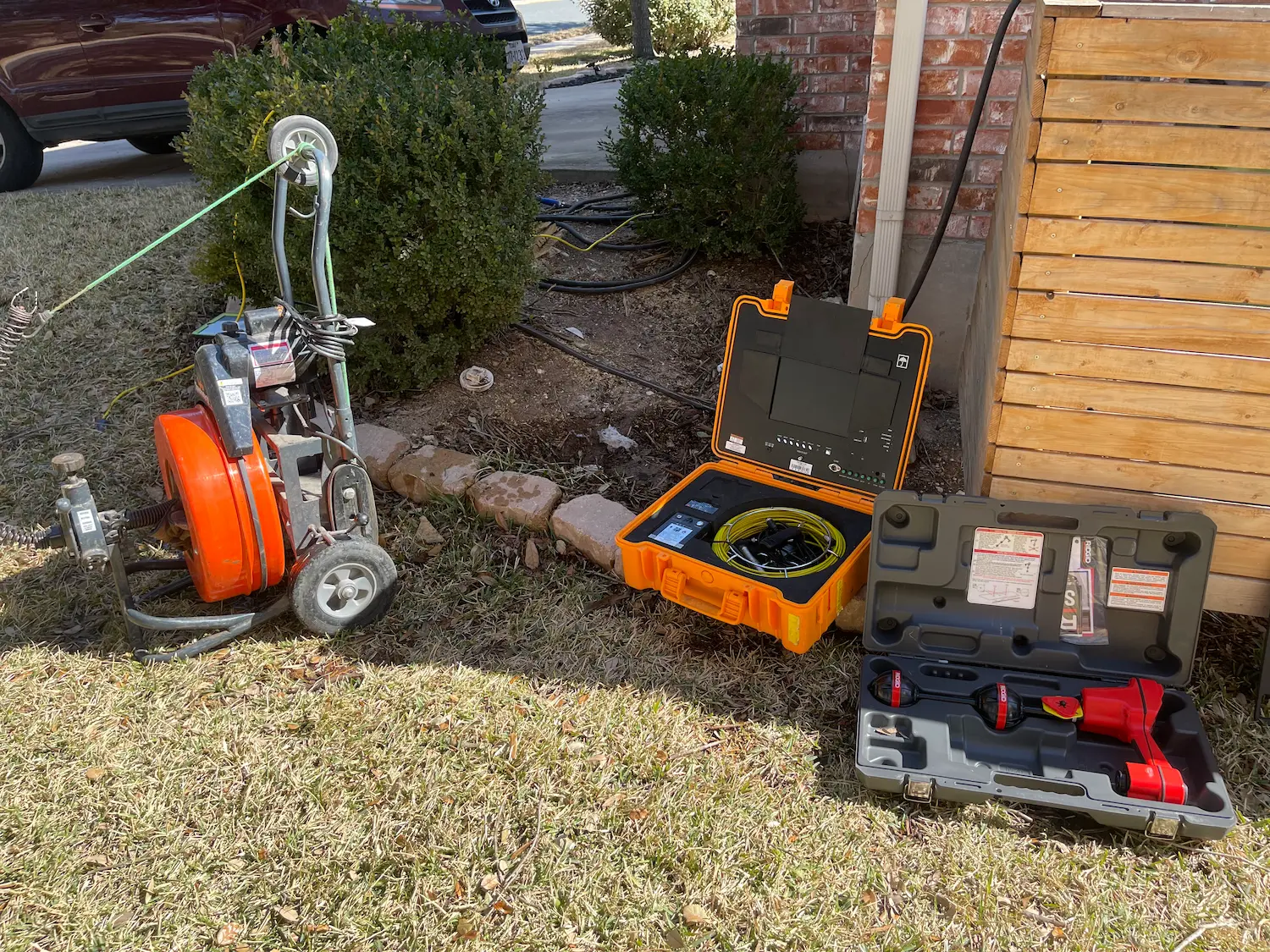
Electronic leak detection is a category of non-destructive methods for locating pipe leaks hidden behind walls, under floors, or below a concrete foundation slab. The combined techniques can pinpoint a leak to within 6-24 inches without opening drywall, pulling flooring, or jackhammering concrete on a guess.
For Round Rock homeowners dealing with slab leaks, pinhole copper leaks, or unexplained moisture, electronic detection is almost always cheaper than destructive search — and far less disruptive.
The Four Core Technologies
1. Acoustic Correlation
The most powerful tool for pressurized water lines. Two highly sensitive microphones are placed at known points on the plumbing (cleanouts, valves, or directly on the floor over the suspected line). The microphones pick up the high-frequency sound of pressurized water escaping a leak. Software correlates the timing difference between the two sensors and calculates the exact point along the line where the sound originates.
In practice, this puts a confirmed leak within a 12-24 inch radius — often within 6 inches in good acoustic conditions.
2. Thermal Imaging
An infrared camera reads surface temperature differences across walls, floors, and ceilings. A hot-water line leaking under the slab creates a warm spot on the floor above. A cold-water leak gradually saturates surrounding material, which reads as a cooler patch (water evaporates and cools the surface).
Limitations: not all leaks produce a usable thermal signature. Cold-side leaks in concrete are particularly hard to see. We use thermal as one input, not the only one.
3. Tracer Gas
A safe, non-flammable mix of 5% hydrogen and 95% nitrogen is introduced into a depressurized water line. Hydrogen is the smallest molecule in the periodic table — it escapes through even the smallest pinhole leak and rises straight up through soil, concrete, and floor coverings.
A handheld hydrogen sniffer is then passed slowly over the suspect area. When the sensor sees hydrogen, we have located the leak.
This is the gold standard for tiny pinhole leaks that acoustic methods cannot hear.
4. Pressure Testing
Before any of the above, we often isolate the system into segments and pressure-test each. This confirms which segment is leaking and rules out the others. It is the most fundamental diagnostic and the cheapest input.
How a Typical Detection Call Goes
- Phone consultation. We ask about symptoms — warm spots, water bill spike, moisture, sound — to choose the right starting methods.
- Pressure isolation. We confirm which line system has the leak (hot, cold, sewer, irrigation).
- Method selection. Acoustic first for most pressurized leaks. Thermal as a complement. Tracer gas as a tiebreaker on small leaks.
- Pinpoint. Multiple measurements until we have a high-confidence location.
- Marking. We mark the location on the floor and wall with painter's tape or chalk.
- Repair quote. With the leak located, we quote the repair (spot repair, reroute, or repipe).
- Repair. Same day if scheduled, or scheduled separately.
Typical time on site: 1-3 hours. Typical accuracy: 90%+ at first marking.
When Electronic Detection Beats Destructive Search
For any leak suspected to be:
- Under a concrete slab
- Behind a tile wall
- Behind cabinetry
- Inside a finished ceiling
- In a wall with significant fixturework
- In a multi-story home where pinpoint matters
The math is simple: destructive search is cheap per square foot but expensive per square foot you guess wrong. Electronic detection costs $400-900 once and avoids the gamble.
When Destructive Search Makes Sense
For leaks under cheap subfloor in an unfinished area, behind drywall in a low-traffic part of the home, or in single-fixture branch lines where the location is obvious. The repair cost is essentially the same; you skip the detection fee.
What Electronic Detection Does Not Find
- Sewer line leaks. Sewer lines are not pressurized, so acoustic methods do not work. We use sewer cameras instead.
- Slow weeping leaks at fittings. Sometimes too small to acoustically detect.
- Leaks that have stopped flowing. A drip that occurs only with hot water demand may not leak during a pressure test.
How Round Rock Conditions Affect Detection
Slab construction. Most Round Rock homes are slab-on-grade. Slab leaks are common, and acoustic plus thermal plus tracer gas is the right combination here.
Clay soil. Wet clay above a leak conducts sound differently than dry clay. We test acoustic correlation under expected conditions.
Hard water deposits. Calcium scale at fitting joints can create false leak signatures (a hissing turbulence sound) — experienced operators distinguish this from real leaks.
Ambient noise. A washing machine running or HVAC on full blast will mask acoustic signals. We ask homeowners to keep things quiet during detection.
What to Expect in the Report
A complete detection report includes:
- The leak location (described in text and shown on photos)
- The method(s) that confirmed it
- Estimated severity (drip, steady flow, gusher)
- Recommended repair approach
- Cost estimate for repair
You keep the report — useful for insurance claims and resale documentation.
Cost vs. DIY
DIY moisture meters and consumer-grade infrared cameras can identify the general area of a leak. They cannot pinpoint the exact source under a slab or behind a wall with the precision needed for surgical repair. The professional equipment is $5,000-15,000 per piece and takes practice to interpret.
For visible leaks or simple under-sink drips, DIY works. For anything hidden, the cost of professional detection is usually a fraction of what destructive search would cost.
Service
Electronic leak detection service throughout Round Rock, Cedar Park, Pflugerville, Georgetown, and Hutto. Free phone consultation.
Related Articles
Need Professional Plumbing Help?
Our licensed plumbers are ready to help with any plumbing issue. Contact us today for fast, reliable service.
Call (512) 598-4241