
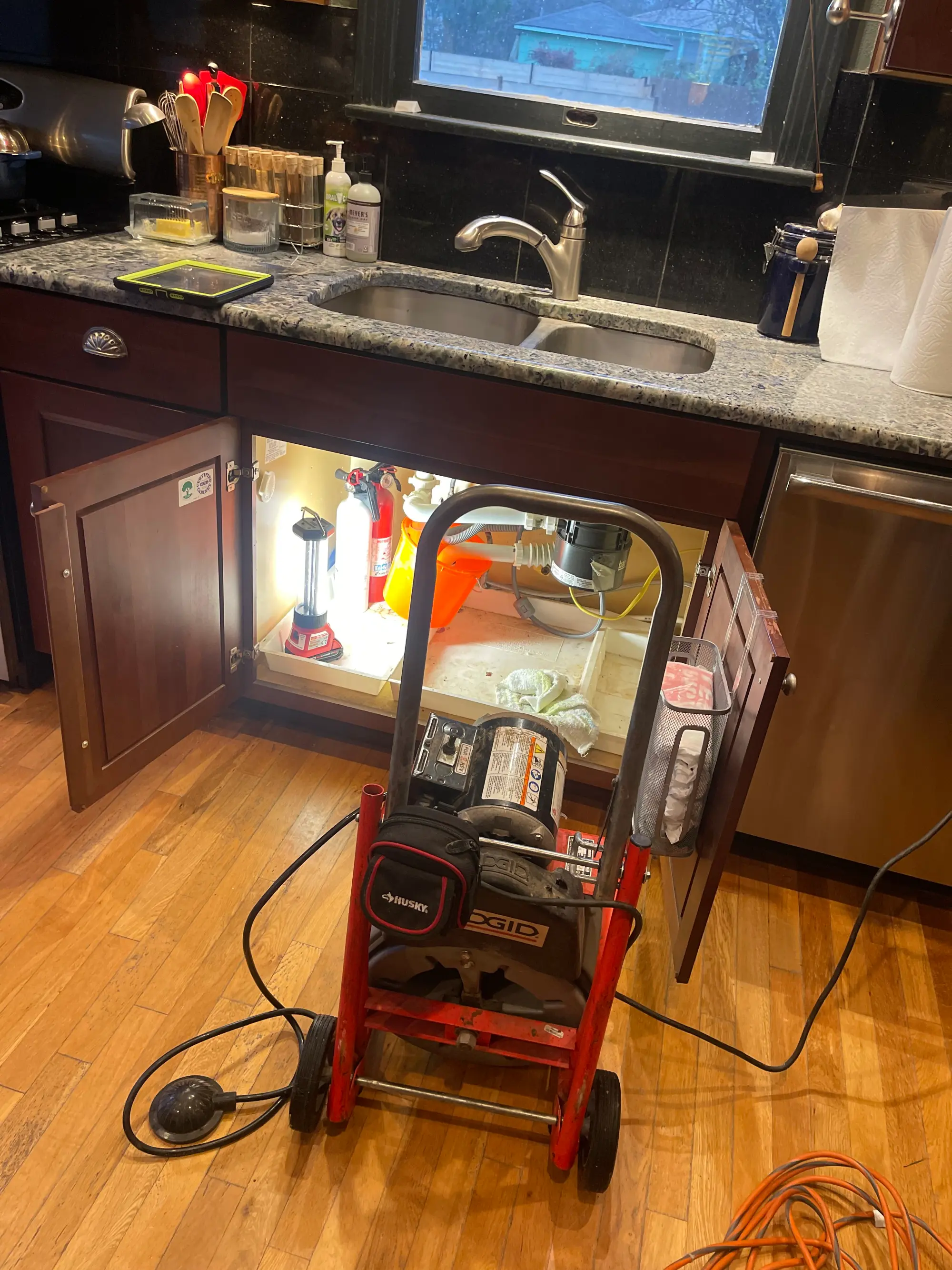
A drain clog affects one fixture — a slow tub, a kitchen sink that will not drain. A sewer clog affects the main line that carries waste from every fixture in your home out to the city tap, which means it shows symptoms in multiple drains at once. Knowing which one you have determines whether you can wait until morning or need an emergency plumber tonight.
This guide walks through the five fastest tests Round Rock homeowners can use to figure out what they are dealing with before they call.
Test 1: How Many Fixtures Are Affected?
This is the single most reliable indicator.
- One fixture slow or backed up — drain clog. The problem is between that fixture and where the branch line ties into the main.
- Two or more fixtures slow at the same time — sewer clog or main line problem. The shared main line cannot drain.
If you flush the toilet and the tub backs up, that is a sewer clog. If you run the kitchen sink and water comes up the dishwasher hose, that is a branch line problem but may still be local.
Test 2: Does the Toilet Gurgle When You Run Water Elsewhere?
When the sewer main is blocked, water draining from one fixture displaces air through the next-easiest path — usually the toilet trap. If running the bathroom sink, washing machine, or shower causes the toilet to gurgle or bubble, your main is at least partially clogged.
This is also called a "running water test." It is one of the fastest ways to confirm a sewer issue from inside the house.
Test 3: Is There a Sewage Smell?
A localized drain clog rarely smells like sewage. It might smell musty or like rotting food. A sewer main clog smells distinctly like sewage because waste is pooling somewhere in the line and venting back through every dry P-trap in the house. The smell is strongest near the lowest fixtures (basement, ground-floor bath, garage floor drain).
If you can smell sewage in multiple rooms, do not run any water until the line is cleared. Continuing to use the plumbing will fill the line and may force sewage back up through the lowest drain.
Test 4: Is Water Coming Up Anywhere It Should Not?
Sewer backups always exit at the lowest point that drains into the main:
- Tub or shower drain on the ground floor
- Floor drain in the laundry room or garage
- Ground-level toilet (which is why it overflows first)
If you see water or sewage coming up in a tub when no one is using it, the main line is full. Stop using water immediately and call.
Test 5: Look for Wet Spots Outside
In Round Rock and surrounding neighborhoods with mature trees, the most common cause of a main line clog is tree root intrusion. The early warning sign is a soggy, sunken, or unusually green strip of grass along the line between your home and the street.
If you see that, the line is likely cracked or root-infiltrated and a snake will be a temporary fix at best. Trenchless sewer repair or partial replacement may be the long-term solution.
What Causes Each Type
Drain (branch line) clogs:
- Hair and soap (showers and tubs)
- Grease, oil, coffee grounds, food debris (kitchen)
- Lint (laundry)
- Foreign objects (toys, hygiene products)
- Hard-water scale narrowing the pipe over years
Sewer (main line) clogs:
- Tree roots growing into the line at joints or cracks
- Heavy paper, wipes, hygiene products (even "flushable" wipes)
- Grease that escaped the kitchen and solidified in the main
- Collapsed or offset pipe (often older clay or cast iron)
- City-side blockage at the tap
What You Can Try Yourself
For a single-fixture drain clog:
- Boiling water down a kitchen sink (only if you have metal pipes — not PVC)
- A wire hanger or hand auger for hair clogs in tubs
- A plunger on a toilet (use a flange plunger, not a cup plunger)
- A wet/dry vacuum on a shower drain
For anything else, especially if multiple fixtures are involved, stop. DIY chemical drain cleaners do not clear sewer main blockages and they can damage older pipes.
When to Call Right Away
Call our emergency plumber immediately if:
- Sewage is backing up into the home
- Multiple fixtures are non-functional
- You smell sewage indoors
- You see standing water in the yard above the sewer line
Call during business hours for:
- A single slow drain you have known about for a few days
- A drain that is slow but still functional
- Preventive sewer camera inspection before a real estate transaction
How We Diagnose
For any suspected sewer clog, we run a camera inspection before deciding on the method. Snaking a main line without seeing what is in it risks pushing the obstruction down to where it is harder to reach or damaging weakened pipe. The camera also tells us whether you need a one-time clear, periodic hydro jetting, or actual pipe repair or replacement.
Service Area
We diagnose and clear sewer and drain clogs throughout Round Rock, Cedar Park, Pflugerville, Georgetown, Hutto, and surrounding Williamson County areas.
Related Articles
Need Professional Plumbing Help?
Our licensed plumbers are ready to help with any plumbing issue. Contact us today for fast, reliable service.
Call (512) 598-4241