
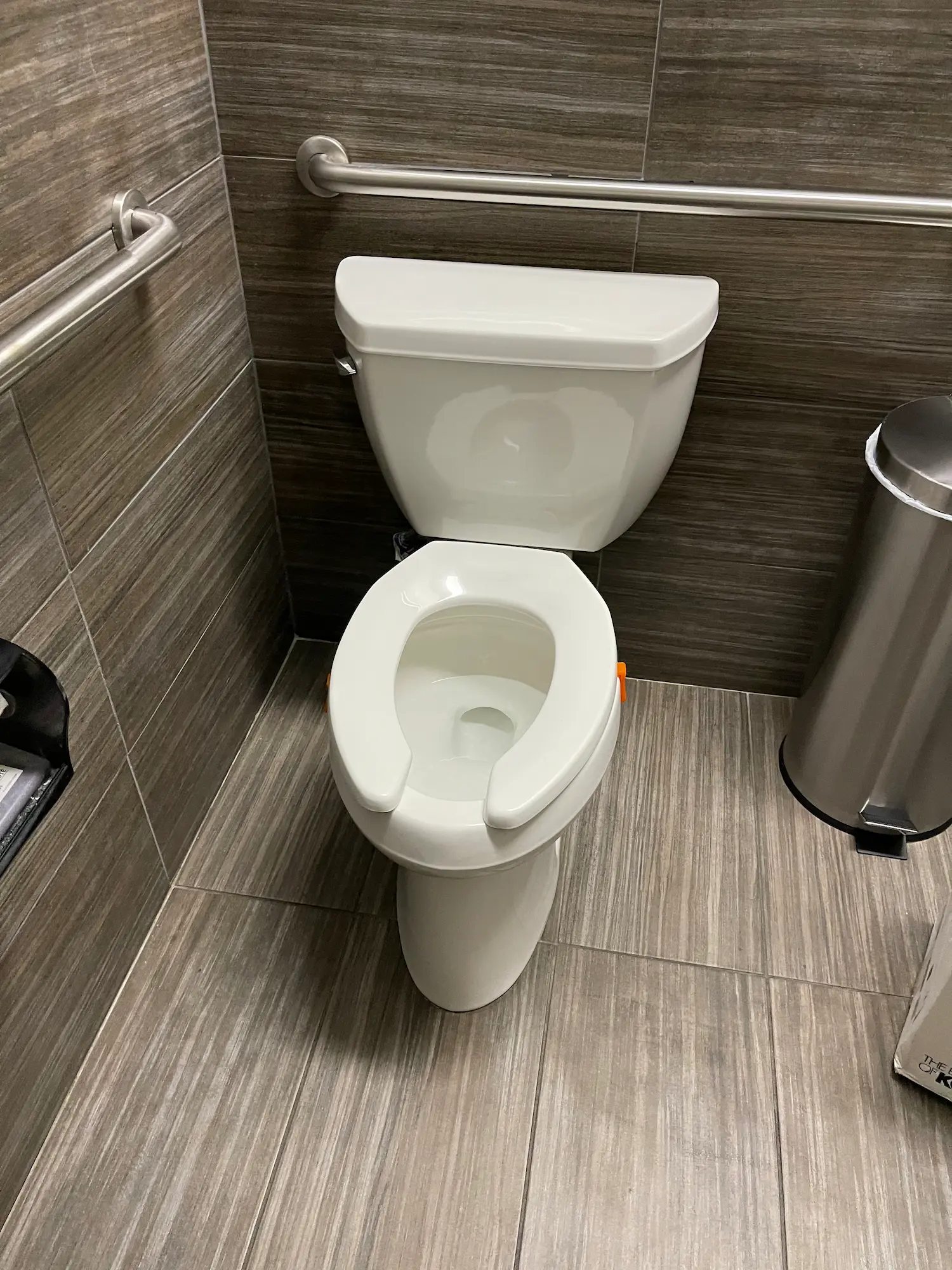
A toilet that keeps running after a flush — or runs intermittently when nobody has touched it — is wasting 1,000 to 4,000 gallons of water per month and putting cumulative wear on the fill valve. Almost every cause comes down to one of three components: the flapper, the fill valve, or the float. Most repairs cost under $20 in parts and take 15 minutes.
This is the diagnostic order we walk through with Round Rock customers when they call about a running toilet.
The Three Components You Need to Know
Inside the tank:
- The flapper — the rubber disc at the bottom of the tank that seals the flush valve. When you push the handle, the flapper lifts, the tank water rushes into the bowl, and the flapper falls back to seal. A worn flapper does not seal completely, allowing water to slowly drain from tank to bowl, which triggers the fill valve to top off the tank.
- The fill valve — the tall vertical assembly that refills the tank after a flush. Modern fill valves are float-cup style (Fluidmaster 400A and similar). Old toilets may have a ball float on a horizontal arm.
- The float — adjustable component that tells the fill valve when to shut off. If set too high, water overflows into the overflow tube and runs continuously.
Step 1: Identify Which Failure Mode
Take the tank lid off (you cannot diagnose without seeing inside).
Listen and look:
Hear water running, see water trickling down the overflow tube (the tall plastic tube in the center): the fill valve is set too high or stuck open. Float adjustment or fill valve issue.
Hear water but the tube is dry: water is leaking past the flapper. Flapper issue.
Tank cycles on for 5-10 seconds every few minutes when nobody has used the toilet: small leak past the flapper or fill valve. Common end-stage of either component.
No sound but the bowl has visible movement at the water surface: very slow flapper leak.
Step 2: The Dye Test (Confirms Flapper Issue)
Drop a few drops of food coloring or a dye tablet (sold in toilet repair sections) into the tank. Do not flush. Wait 20-30 minutes.
If color appears in the bowl, water is leaking past the flapper. Time to replace the flapper.
Step 3: Fix the Flapper
Most worn flappers need to be replaced, not repaired:
- Turn off the water supply to the toilet (valve behind toilet, clockwise)
- Flush to drain the tank
- Hold the flapper closed and sponge out remaining water
- Disconnect the flapper chain from the handle lever
- Remove the old flapper from the overflow tube pegs (usually slides off)
- Take it to the hardware store to match — or buy a universal flapper ($5-15)
- Install the new flapper
- Reconnect the chain (leave a little slack — too tight and it will hold the flapper open)
- Turn water back on
- Flush and test
Time: 15 minutes. Cost: $5-15.
Step 4: Adjust the Float
If the tank water level is at or above the overflow tube top, water continuously trickles into the bowl. Solution: lower the float so the fill valve shuts off earlier.
Float-cup style fill valve (modern): look for an adjustment screw or clip on top of the fill valve. Turn the screw counterclockwise (or move the clip down) to lower the water level. Aim for water level about 1 inch below the top of the overflow tube.
Ball float (older): bend the brass arm downward slightly. A small bend changes water level significantly.
Test by flushing and watching the refill — should stop with water about 1 inch below the overflow tube top.
Time: 5 minutes. Cost: $0.
Step 5: Replace the Fill Valve
If the fill valve hisses, will not shut off, or keeps cycling even after flapper and float adjustment, replace it.
- Turn off water supply
- Flush to drain
- Disconnect supply line at the bottom of the fill valve
- Loosen the lock nut securing the fill valve from below
- Lift out the old fill valve
- Install new fill valve (Fluidmaster 400A is a universal standard, $8-15)
- Adjust height per instructions
- Tighten lock nut
- Reconnect supply
- Test
Time: 20 minutes. Cost: $8-15.
When DIY Is Not Enough
Call a plumber when:
- You've replaced the flapper AND the fill valve and the toilet still runs
- The water supply valve behind the toilet is stuck or leaking
- The toilet itself has cracks (replace the toilet)
- The bowl rocks on the floor (wax ring or flange issue)
- You see water at the base of the toilet (different problem — wax ring leak)
- You are uncomfortable with toilet repair
Schedule plumber service for these.
Cost If You Call a Plumber
| Service | Round Rock typical cost |
|---|---|
| Flapper replacement (with diagnostic) | $125-200 |
| Fill valve replacement | $150-250 |
| Both | $175-275 |
| Full toilet rebuild kit | $200-350 |
| Toilet replacement | $400-800 |
| Wax ring + flange (water at base) | $250-450 |
How Much Water a Running Toilet Wastes
A continuously running toilet wastes 60-200 gallons per hour. At Round Rock water rates, a toilet that runs unnoticed for a month adds $50-200 to your water bill.
The repair pays for itself in one or two months for any sustained running toilet.
Prevention
- Replace the flapper every 4-6 years (rubber degrades over time, especially in Round Rock chlorinated water)
- Replace the fill valve every 8-12 years
- Do not use in-tank cleaner tablets (they accelerate flapper degradation)
- Adjust water level annually if needed
Service
Toilet repair and replacement throughout Round Rock, Cedar Park, Pflugerville, Georgetown, and Hutto.
Related Articles
Need Professional Plumbing Help?
Our licensed plumbers are ready to help with any plumbing issue. Contact us today for fast, reliable service.
Call (512) 598-4241