When plumbing floods strike, the visible mess is only part of the problem. Hidden water damage can linger behind walls, under floors, or in unseen spaces, leading to costly repairs and health risks. Here’s what you need to know:
- Key Warning Signs: Look for water stains, peeling paint, warped floors, musty smells, or sudden spikes in your water bill.
- Health Risks: Mold can grow in as little as 24-48 hours, causing respiratory issues and structural damage.
- Structural Damage: Moisture can weaken wood, drywall, and subfloors, leading to rot and costly repairs.
- Where to Check: Inspect under sinks, around toilets, baseboards, floors, attics, crawl spaces, and basements.
- When to Call Experts: Large damage areas, recurring mold, or structural issues require professional tools like thermal imaging and moisture meters.
Act fast to prevent long-term damage. Regular checks and professional assessments can save your home from hidden water damage and costly repairs.

Signs of Hidden Water Damage After Plumbing Floods: Visual Inspection Guide
How to Spot Hidden Water Damage After a Flood
sbb-itb-5fe396b
Visual Signs of Hidden Water Damage
Keep an eye out for visible clues like stains, peeling, or warped surfaces that might signal hidden water damage. Even though moisture often stays out of sight, it tends to leave behind noticeable traces. Spotting these early can save you from expensive repairs. By examining these details closely, you can figure out where the damage is and how severe it might be.
Water Stains and Discoloration
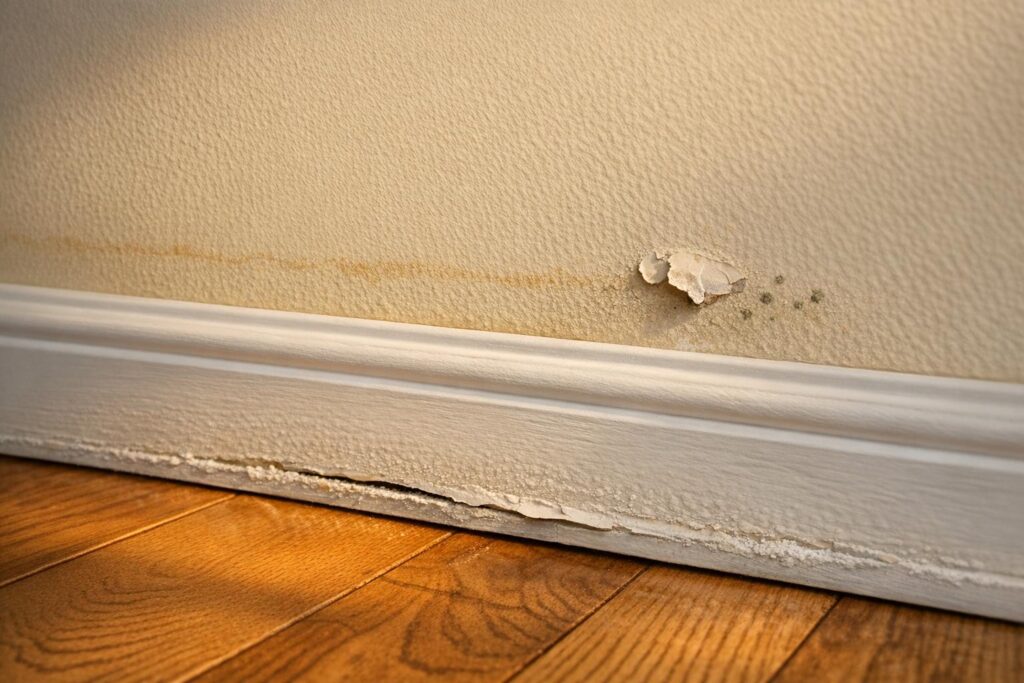
Water stains usually show up as yellow, brown, or copper-colored spots on walls and ceilings. These marks trace the path of water, revealing the areas where materials have absorbed moisture. Fresh damage often looks like dark, wet spots, while older damage takes on a yellowish-brown or chalky white appearance.
Where the stains appear can give you a big clue about the source of the water. For example, stains below kitchens or bathrooms often point to plumbing leaks, while those near light fixtures or corners may suggest a roof issue. Don’t just rely on sight – press firmly on stained areas. If the drywall feels soft, spongy, or collapses inward, it’s a sign that moisture is still present behind the surface, even if it looks dry.
Moisture doesn’t just leave stains – it also affects surface finishes.
Peeling Paint or Bubbling Wallpaper
When moisture collects behind walls, it weakens the bond between the surface and its finish. You might notice bubbling, cracking, flaking, or peeling paint or wallpaper, especially near the bottom of walls where water tends to accumulate. In some cases, wallpaper can start to bubble or detach entirely if indoor humidity levels stay above 70% for too long.
Before you repaint or reapply wallpaper, it’s crucial to fix the moisture problem. Otherwise, the damage will just keep coming back.
Warped or Buckling Floors
Wood and laminate floors are particularly sensitive to moisture. Look for signs like cupping (edges curling upward), crowning (the center of planks rising), or buckling, where the floor separates from the subfloor entirely. Laminate flooring may show swelling at the seams or gaps between planks.
Damaged floors often feel uneven or spongy underfoot. You might also notice creaking, cracking, or popping sounds as you walk – this happens when wood expands from moisture or nails loosen from the subfloor. As Carey Vermeulen, former President of the Institute of Inspection Cleaning and Restoration Certification, puts it:
The wood swells around the nail and allows the nail to be pulled from the subfloor. After drying, there is a slight separation between the plank and the subfloor… causing the planks to rub against each other, causing the creaking noise.
Flooring issues are surprisingly common, accounting for about 25.6% of all water damage repair visits. This makes it one of the most frequently affected areas after plumbing-related floods.
Musty Odors and Mold Growth
Sometimes, the most telling signs of hidden moisture issues aren’t visible but can be sensed – like the unmistakable musty smell that lingers after a plumbing flood.
A persistent musty odor isn’t just an annoyance; it’s a red flag that moisture is still present in your home. This smell comes from microbial volatile organic compounds (MVOCs), which are released by mold and bacteria thriving in damp conditions. As Relief Restorations puts it:
"If a space smells like water damage, there is usually still a moisture-related issue present somewhere in the structure."
This odor indicates ongoing damage as materials like drywall, wood, and carpet fibers absorb water and begin to deteriorate. Even if surfaces seem dry, moisture can hide in porous materials like insulation, subfloors, and wall cavities, creating a perfect environment for mold to grow. The smell often worsens in high humidity or poorly ventilated areas.
Why Musty Odors Point to Hidden Moisture
Mold can start forming and releasing odorous gases within just 24 to 48 hours of water exposure. When indoor humidity levels exceed 60%, the conditions become even more favorable for mold growth.
To locate the source of the smell, follow your nose. Focus on areas prone to dampness, such as bathrooms, basements, under sinks, and behind kitchen cabinets. Don’t rely on air fresheners or sprays to mask the odor – they won’t address the root cause and may allow structural damage to worsen.
Recognizing these odors is the first step toward tackling mold and preventing further damage.
Finding and Addressing Mold Growth
When dealing with hidden water damage, addressing mold is crucial because it’s both a symptom and a cause of structural deterioration. Mold spores activate when they come into contact with moisture and organic materials like drywall, wood, or insulation. Hidden plumbing leaks or damp, enclosed spaces can provide the perfect conditions for mold to thrive. Often, visible mold is just the tip of the iceberg, signaling a larger, concealed infestation.
Mold doesn’t just smell bad – it actively breaks down organic materials, causing wood rot and weakening your home’s structure over time. It also poses health risks, particularly for children, the elderly, or individuals with compromised immune systems. Mold exposure can lead to coughing, wheezing, headaches, fatigue, skin irritation, and worsened asthma symptoms. As Carey Vermeulen and Mark Cornelius of the IICRC explain:
"The only acceptable way to remediate microbial growth is to remove it. Therefore, if a mold remediation contractor enters the home and simply sprays a chemical on the mold, they have not performed proper remediation."
For small mold patches (under 10 square feet), you can handle cleanup yourself with the right protective gear. However, larger infestations call for professional intervention. Disturbing a large mold colony can release millions of spores into the air, spreading the problem further. Professionals use tools like moisture meters and thermal imaging cameras to detect hidden dampness behind walls and under floors – areas you might miss with the naked eye.
Changes in Water Bills and Pressure
Sometimes, the most telling signs of hidden water damage aren’t visible on your walls or floors – they show up in your water bills or as changes in water pressure. These subtle clues can often be the first indicators of trouble lurking within your plumbing system.
Sudden Increases in Water Bills
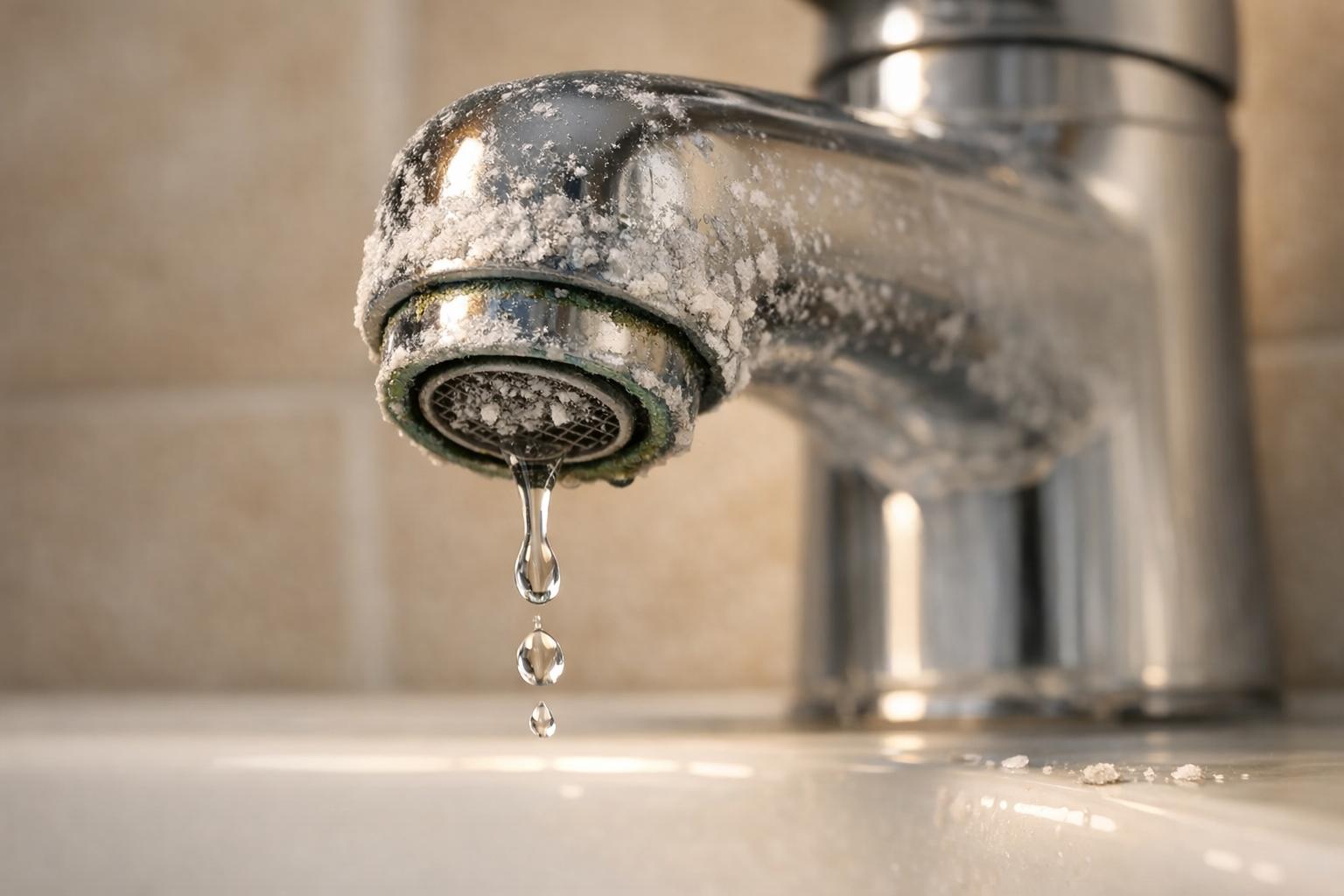
If your water bill suddenly spikes for no clear reason, it might be more than just a billing error. Even a tiny leak, as small as 1/32 of an inch, can waste over 6,000 gallons of water in a month. A pinhole leak? That could cost you nearly 400 gallons per day – enough to fill a small pool in just a month.
To get a clearer picture, compare your current bill to the same month last year instead of just the previous month. This method accounts for seasonal usage changes, like watering your lawn in summer. If you notice a 20% or greater increase without a change in your habits, it’s time to investigate further. On average, households waste nearly 9,400 gallons of water annually due to leaks, many of which aren’t discovered until they show up on the bill.
Slab leaks – those sneaky breaks in pipes under your concrete foundation – are particularly tricky. They often don’t leave visible signs, except for higher bills or, in some cases, warm spots on the floor if a hot water line is involved.
A simple water meter test can help confirm a suspected leak. Turn off all water sources, note the meter reading, and check it again after 30 to 120 minutes. If the reading changes, you’ve got a leak.
Low or Changing Water Pressure
A noticeable drop in water pressure is another red flag. It could mean water is escaping through a leak before it reaches your faucets or showerheads. A significant break in your plumbing line can divert water away from your fixtures, leaving you with a frustratingly weak flow.
Start by determining if the pressure drop is isolated to a single fixture or affects multiple ones. If the issue is widespread, it’s likely a leak in the main plumbing system rather than a clogged faucet aerator. Just like hidden moisture behind walls, low water pressure can point to concealed problems within your pipes. Testing the flow at various faucets can help narrow down the location of the issue.
After major plumbing work or a flood, sediment might clog the pipes, or valves could be left partially closed, leading to pressure fluctuations. Before assuming the worst, check with your local water utility to see if maintenance work in your area is causing the problem.
To protect your plumbing, use a pressure gauge to ensure your home’s water pressure stays between 40 and 80 PSI. Pressure above 80 PSI can wear down pipes, leading to pinhole leaks or even bursts. At night, listen carefully for hissing or trickling sounds – these can help you locate a hidden leak with electronic leak detection.
Where to Check for Hidden Water Damage
After a flood, water can sneak into places you wouldn’t normally think to check – under floors, inside walls, and other overlooked areas. Spotting these hidden issues early can save you from bigger problems down the road. Just like visible stains and odors, these concealed spots can slowly undermine your home’s stability.
Under Sinks and Around Toilets
Start by inspecting areas near plumbing fixtures. Use a flashlight to check under kitchen and bathroom sinks. Look closely at valves, supply lines, and P-traps for signs of dampness, rust, or leaks. Warped cabinet bottoms or musty smells are also red flags. Don’t forget to check behind appliances like washing machines, refrigerators, and garbage disposals, as their connections are common sources of leaks.
Next, examine the floor around your toilet. Press gently near the base; if it feels soft or spongy, the subfloor might be water-damaged. A wobbly or unstable toilet could signal a leaking wax ring, which can weaken the floor over time. To check for a leak in the toilet tank, try a dye test: add food coloring to the tank and wait. If the color shows up in the bowl without flushing, you’ve got a leaky flapper, which can waste up to 200 gallons of water daily. Catching these issues early can prevent more extensive damage.
Baseboards and Floor Edges
Water tends to follow the edges where floors meet walls. Check your baseboards for swelling, peeling paint, or horizontal discoloration – these "tide lines" are a telltale sign of water infiltration. Press along the baseboards to feel for any soft or weakened areas.
Floor edges are another vulnerable spot. Water can seep into gaps in tile grout, laminate seams, or the edges of hardwood planks. Look for signs like "cupping", where wood plank edges rise, or "crowning", where the center bulges upward. Loose tiles, separating laminate, or squishy carpet can also indicate hidden moisture. Run your hand along the floor near walls; cooler spots might hint at evaporation. Addressing these signs early can stop the damage from spreading to deeper layers of your flooring.
Attics, Crawl Spaces, and Basements
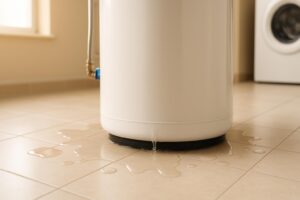
These out-of-sight areas are often the last to be checked but can hide significant water damage. Basements naturally collect water as it flows downward. Look for tide lines or a white powdery residue (efflorescence) on foundation walls – both indicate water seepage. Also, inspect sump pits, floor drains, and water heaters, as concrete can absorb and slowly release moisture over time.
Crawl spaces are another hotspot for trouble. Their dark, damp environment makes them prone to mold and wood rot. Look for sagging insulation, discolored or soft wooden beams, and musty odors. Moisture here can also attract pests. To test for water, try the foil trick: tape a piece of aluminum foil to a suspicious area and leave it for 24 hours. If moisture appears underneath, water is seeping in.
In attics, water damage often comes from roof leaks or upstairs plumbing issues. Water can travel along rafters and pool on ceiling drywall, soaking insulation and wooden structures before you notice any stains below. Check for damp or compressed insulation and discoloration on wood framing. If your HVAC system is in the attic, be aware that flooded ductwork can spread mold spores throughout your house.
"The cost of inspection is minimal compared to damage from undetected moisture." – Advanced Disaster Recovery Inc.
Regular checks of these areas – especially after flooding, plumbing work, or heavy rain – can help you catch hidden water damage before it becomes a bigger issue. A monthly inspection can go a long way in protecting your home’s structure and keeping repair costs down.
When to Call a Professional for Water Damage Assessment
Some water damage situations go beyond what a homeowner can handle and require the expertise of a professional. While regular maintenance can help catch early signs of trouble, there are certain scenarios where immediate professional intervention is essential to protect your home.
Warning Signs That Need Expert Help
If water damage spans an area larger than 10 square feet, it’s time to bring in a professional. The same applies if the source of the leak isn’t clear or if the damage involves sewage backup or flooding – these situations are complex and often hazardous.
Structural issues like sagging ceilings, warped walls, or soft flooring are red flags that water has compromised your home’s integrity. These issues demand urgent evaluation to prevent further deterioration. Water near electrical systems or visible rust and corrosion on pipes are also serious concerns. Attempting DIY fixes in these cases can be dangerous.
Another major indicator is recurring mold. Mold can start growing within 24 to 48 hours of water exposure, and its persistence often points to hidden moisture behind walls or under floors. This type of problem requires specialized tools and expertise to address effectively.
Professional Tools for Finding Hidden Problems
Professionals have access to advanced tools that can uncover hidden water damage without tearing apart your home. For instance, infrared thermal imaging cameras detect temperature variations behind walls and under floors, revealing the path of moisture. Electronic leak detection pinpoints the exact source of plumbing issues, while professional-grade moisture meters measure how deeply water has penetrated materials.
Companies like Round Rock Plumbing use these technologies, along with tools like drain cameras and high-powered dehumidifiers, to quickly and accurately address water damage. Commercial-grade equipment, such as industrial pumps, can remove moisture far more effectively than standard household fans, reducing the risk of long-term damage like rot or mold. Certified technicians follow IICRC standards to ensure proper remediation.
Before professionals arrive, you can help minimize damage by turning off your main water supply and documenting the affected areas with photos for insurance purposes.
Conclusion
Hidden water damage demands immediate attention to avoid escalating problems. After a plumbing flood, water often lurks behind walls, under floors, and in crawl spaces, leading to issues that worsen over time. Within just 24 to 48 hours, mold can begin to grow, and prolonged exposure to moisture can cause wood framing to swell, warp, and rot, jeopardizing your home’s structure. What might seem like a small leak can quickly snowball into thousands of dollars in repairs, not to mention health risks from mold and allergens.
By staying alert to the warning signs – such as water stains, peeling paint, warped flooring, musty odors, unexpected spikes in your water bill, or changes in water pressure – you can catch hidden damage early. Regularly checking under sinks, around baseboards, in attics, and in crawl spaces can also help you spot trouble before it gets out of hand.
If you discover significant water damage, structural concerns, or recurring mold, it’s time to bring in professionals. Experts equipped with tools like thermal imaging cameras and moisture meters can identify issues that aren’t visible to the naked eye. The cost of a professional inspection is a small price to pay compared to the expense of untreated moisture damage. For residents of Round Rock, Texas, services like Round Rock Plumbing offer the advanced diagnostics needed to keep minor problems from becoming major disasters. Addressing leaks promptly is the key to avoiding costly and hazardous damage.
FAQs
How can I confirm a hidden leak after a plumbing flood?
If you’re dealing with an unexplained jump in your water bill, wet spots around your home, mold growth, musty smells, or even the sound of running water when no taps are on, you might have a hidden leak. Tools like moisture detectors and drain cameras can help pinpoint leaks concealed behind walls or under floors. Also, keep an eye out for discoloration, warped surfaces, or sagging ceilings – these are often red flags. In such cases, reaching out to a plumbing service equipped with advanced diagnostic tools is a smart move.
How quickly should I dry wet areas to prevent mold?
Wet areas need to be dried out within 24 to 48 hours to stop mold from developing and avoid further damage. Quick action is key to reducing risks and keeping the space safe.
Will my insurance cover hidden water damage from a leak?
Insurance coverage for hidden water damage largely depends on the specifics of your policy and the circumstances surrounding the damage. Typically, sudden and accidental leaks – like a burst pipe – are covered. However, damage resulting from long-term leaks or neglect is usually excluded. To understand what’s covered, it’s best to review your policy details or reach out to your insurance provider for clarification.