Fixing leaks doesn’t have to mean tearing up your home. Plumbers in Round Rock now use acoustic leak detection to pinpoint water leaks with precision. This advanced method relies on specialized microphones and sensors to detect the sound of water escaping from pipes, eliminating the need for unnecessary digging or cutting.
- How it works: Acoustic tools amplify leak sounds, allowing technicians to locate issues within inches, even under concrete slabs or deep underground.
- Why it matters: The average home loses over 10,000 gallons of water per year to leaks, causing higher bills and potential damage to foundations.
- Key benefits: Faster repairs, minimal property disruption, and reduced restoration costs.
This guide explains how local plumbers use this method to address slab leaks, irrigation system issues, and underground pipe problems efficiently.
Expert Plumber Teaches Leak Detection
What Is Acoustic Leak Detection?
Acoustic leak detection relies on specialized tools to detect the sounds created by water escaping through cracks or damaged sections of pipes. When water leaks, it generates vibrations that travel through the pipe and the surrounding materials. These vibrations produce a distinct sound pattern that trained technicians can identify to locate the leak. For homeowners in Round Rock, this technique reduces the need for invasive repairs and helps maintain the integrity of their property.
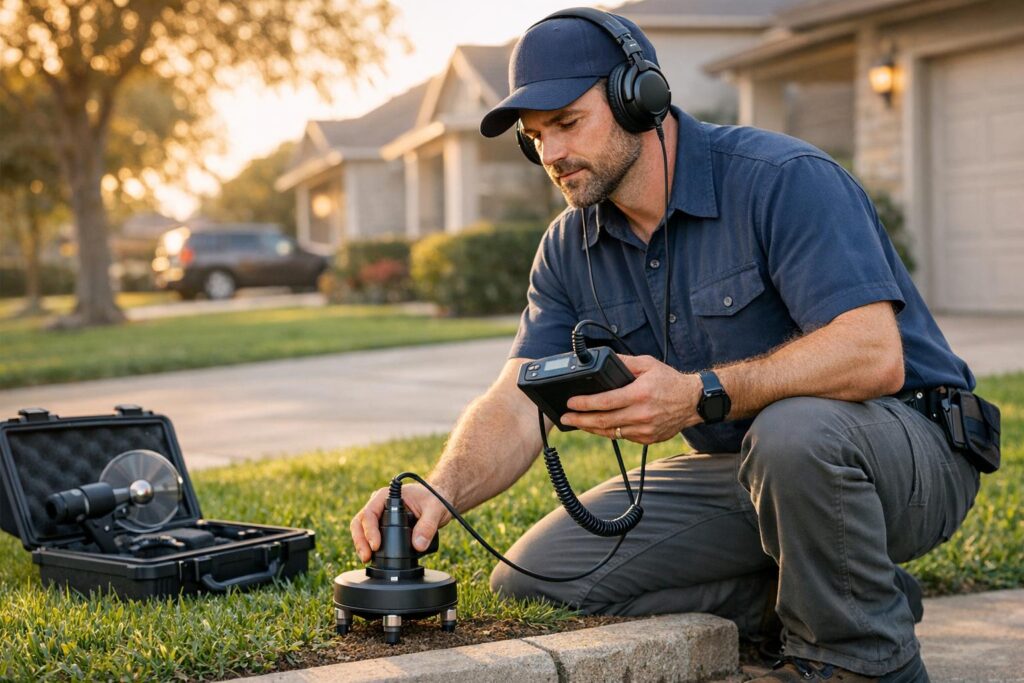
In most residential plumbing systems in Round Rock, where pipes are pressurized at 30 psi or higher, leaks typically emit a low-pitched tone. To locate these leaks, technicians use sensitive ground microphones (like the DXmic), hydrophones, and digital monitors that measure sound levels in decibels. An "elephant foot" attachment is often added to the microphone to block out background noise from sources like traffic or wind.
"Acoustic leak detection uses specialized microphones and sensors to ‘listen’ for the distinct sounds that leaks produce as water escapes from pressurized pipes."
– LeakTronics
The sound frequency varies depending on factors such as the pipe material (metal, PVC, or ceramic), diameter, depth, soil type, and surface covering (asphalt, concrete, or grass). By moving the listening device along the pipe’s path, technicians can identify the point where the sound is strongest, which typically indicates the leak’s location. This precise sound signature helps them transition seamlessly from detection to pinpointing the exact site of the problem.
How Acoustic Leak Detection Works
The process starts by converting the subtle vibrations caused by leaks into measurable signals. Technicians use high-quality headphones to filter out background noise and focus on the leak’s sound. The equipment amplifies these faint sounds, enabling technicians to detect even small leaks that could lead to significant water loss over time.
For more complex scenarios, advanced systems use correlation technology. By placing multiple sensors along a pipe, these systems measure the time it takes for the leak’s sound to reach each sensor. Using this data, they calculate the precise location of the leak. This method is especially effective for long pipe runs or leaks buried deep under concrete slabs, allowing for accurate and efficient repairs.
Benefits of Acoustic Leak Detection
One of the standout advantages of acoustic leak detection is its non-invasive nature. Traditional methods of finding leaks often involve exploratory digging or cutting into walls and floors – an approach that can be both costly and damaging to your property. Acoustic detection, on the other hand, identifies leaks from the surface, enabling targeted repairs with minimal disruption.
This method not only protects your property but also helps save money and water. In the U.S., household leaks waste nearly 1 trillion gallons of water annually, with the average home losing over 10,000 gallons each year. Addressing these leaks can reduce a homeowner’s water bill by about 10% monthly. For Round Rock residents, especially those with slab foundations or challenging soil conditions, acoustic detection provides a fast and precise way to safeguard both their homes and their budgets.
Additionally, acoustic detection works across a wide range of materials, including copper, PVC, PEX, and even concrete. This versatility makes it an excellent choice for residential and commercial properties alike throughout Round Rock.
Tools and Technology Used by Round Rock Plumbers
Equipment for Acoustic Leak Detection
Plumbers in Round Rock rely on highly specialized tools to detect leaks with precision. One key tool is the ground microphone, which uses digital amplifiers to pick up the unique sound frequencies created when pressurized water escapes from pipes. These microphones amplify even the faintest sounds, converting them into clear signals that technicians can hear through noise-filtering headphones.
Hydrophones are another essential tool, designed to detect internal leak sounds by directly contacting pipes, valves, or hydrants. For pools and spas, floating hydrophones excel at identifying leaks in water systems. In cases of long or deeply buried pipelines, correlation technology comes into play. This system uses multiple sensors to measure sound time delays, accurately pinpointing the leak’s location.
Electromagnetic pipeline locators add another layer of precision by tracing the exact path and depth of water lines without requiring excavation. This helps technicians identify where to focus their acoustic inspections. Additionally, infrared thermal imaging cameras are used to detect temperature variations, making it easier to spot hot water leaks or areas of water saturation hidden behind walls or under floors.
By combining these tools, Round Rock plumbers can achieve highly accurate leak detection with minimal disruption.
Advanced Technology at Round Rock Plumbing

Round Rock Plumbing takes leak detection to the next level with a multi-sensory diagnostic system that integrates cutting-edge technologies. Their approach ensures remarkable accuracy, often identifying leaks within mere inches. By combining acoustic listening devices, electromagnetic pipe locators, and infrared thermography, technicians can cross-verify leak locations using multiple data points before starting repairs.
"We use state-of-the-art, non-invasive technology to accurately pinpoint the exact source of water leaks anywhere on your property… all without unnecessary destruction."
– Round Rock Plumbing
This advanced technology significantly reduces property damage and lowers restoration costs. Technicians can target only the affected area, avoiding unnecessary disruption and speeding up the repair process. This efficiency not only ensures quicker fixes but also leads to better outcomes for homeowners. The company’s commitment to precision and customer satisfaction is evident in its impressive 4.9-star rating for electronic leak detection services. Additionally, Round Rock Plumbing offers free quick estimates and upfront quotes after the initial inspection, making the process transparent and hassle-free for customers.
Step-by-Step Process for Detecting Leaks
3-Step Acoustic Leak Detection Process Used by Round Rock Plumbers
Initial Inspection and Survey
When homeowners in Round Rock suspect a leak, plumbers kick off the process with a consultation. They ask about common warning signs like unexplained spikes in water bills, the sound of running water when no fixtures are in use, or even warm spots on the floor. Then, they inspect the property for visible indicators such as mold growth, foundation cracks, or moisture stains – all potential clues pointing to a hidden leak. This method keeps disruption to a minimum, a key advantage of modern acoustic detection techniques.
Next, plumbers map the plumbing system using electromagnetic pipeline locators. This technology helps trace the exact location and depth of underground or hidden water lines without the need for excavation. This step is particularly important in Round Rock’s rocky, limestone-heavy terrain, where water often seeps downward through rock instead of pooling on the surface, making visual detection tricky. Once they’ve mapped the system and gathered initial clues, plumbers move on to actively listen for leak sounds.
Scanning and Locating the Leak
To find the leak, plumbers rely on sensitive microphones paired with digital amplifiers that detect the distinct sound frequencies of water escaping pressurized pipes. These tools are designed to filter out background noise – like traffic or HVAC systems – so they can zero in on the telltale hiss or rush of a leak.
Technicians place sensors or hydrophones directly onto pipes at access points such as valves, hydrants, or water meters to capture vibrations. If the leak remains hard to pinpoint, they may introduce a safe, non-toxic tracer gas into the pipe. Using electronic detectors, they can then identify where the gas escapes, even at extremely low levels. Some services in Round Rock boast an impressive 98% accuracy rate in locating hidden leaks by combining these methods.
"Water leak detection gear is revolutionary because it lets our plumbers listen for leaks instead of cutting in and visually inspecting in multiple locations."
– Beyond Wow
Once they detect the sound of a potential leak, plumbers use additional tools to verify its exact source.
Verification and Repair
To confirm their findings, plumbers use advanced tools like infrared thermal imaging cameras, which detect temperature variations on surfaces. These cameras reveal heat from hot water leaks or cold spots caused by water saturation behind walls or under floors. For sewer or drain lines, high-resolution fiber-optic cameras provide a direct visual of cracks or damage.
After pinpointing the leak – often accurate to within inches – plumbers present an upfront repair estimate. This targeted method ensures they only open up the specific area needing repair, avoiding unnecessary demolition and keeping restoration expenses low.
"We pinpoint the leak first, so we only open what’s necessary for the repair."
– Round Rock Plumbing
sbb-itb-5fe396b
Common Plumbing Issues Detected in Round Rock
Slab Leaks and Foundation Problems
In Round Rock, many homes are built on slab-on-grade foundations – a quick and cost-efficient method of construction. But there’s a catch: water lines run directly beneath the concrete, making leaks tricky to detect until the damage becomes severe. This is where acoustic leak detection comes in, using sound to locate water escaping from pressurized pipes under the slab.
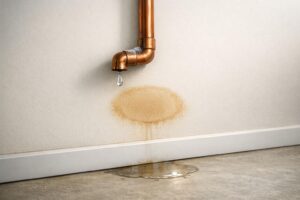
Older homes, especially those with cast iron or copper pipes from the 1970s, are particularly vulnerable. Over time, these materials corrode, leading to pinhole leaks. A telltale sign of trouble is warm spots on the floor, often signaling a break in a hot water line beneath the slab. One notable case involved a 1970s home losing over 1,000 gallons of water daily. Thanks to acoustic inspection, the leak was identified in just 90 minutes. If left unchecked, constant moisture can crack the foundation and compromise the home’s structural stability.
Service Line and Pipe Leaks
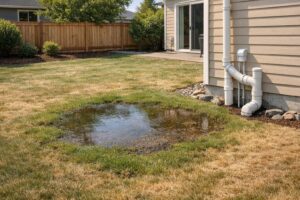
Underground service lines are another common headache for homeowners. Shifts in the soil or ground movement can crack the main water supply line, leading to leaks. For example, if you notice puddles on your lawn during a dry spell, it could mean trouble with your service line. Fortunately, acoustic detection tools can locate these leaks without tearing up your yard unnecessarily.
Homes built before 1986, which often feature cast iron pipes, are especially prone to corrosion from soil pressure. Even a minor hidden leak can waste over 5 gallons of water daily. Using acoustic technology ensures precise detection, so only the affected section of the pipe needs excavation.
Irrigation System Leaks
Extensive underground irrigation systems, common in both residential and commercial properties, are another source of hidden leaks. These leaks often go unnoticed until they cause surface damage or lead to significant water loss. Acoustic technology is particularly effective here, filtering out background noise to pick up the distinct sound of water escaping from PVC or PEX pipes.
"Highly sensitive microphones can ‘hear’ the distinct sound of water escaping a pressurized pipe, even deep underground or beneath a concrete slab."
– Round Rock Plumbing
Watch out for soggy patches or unusually lush, green grass – these could signal an irrigation system leak. Addressing these issues quickly can save up to 10% on utility bills. Plus, Round Rock water customers can take advantage of a free irrigation system check offered by the city’s conservation team.
Benefits of Acoustic Leak Detection for Round Rock Residents
Acoustic vs. Older Detection Methods
Acoustic leak detection offers a precise, non-invasive way to locate leaks, standing in stark contrast to older, more invasive methods. Traditional approaches often required cutting into walls or digging up yards just to find the source of a leak. In comparison, acoustic detection uses sensitive microphones and digital amplifiers to "listen" for the sound of leaks through materials like concrete and soil. This technology can pinpoint the exact location of a leak within inches, all without causing damage to your property.
| Feature | Acoustic/Electronic Detection | Traditional/Conventional Methods |
|---|---|---|
| Invasiveness | Non-destructive; no digging or cutting required | Requires cutting, digging, or jackhammering |
| Accuracy | Highly precise, often within inches | Relies on guesswork and visual inspection |
| Time Efficiency | Locates leaks in minutes | Can take days of exploratory work |
| Cost Savings | Reduces property restoration expenses | Higher costs due to extensive repairs and restoration |
This level of precision not only simplifies repairs but also helps protect your property from further damage.
Long-Term Benefits for Local Properties
Acoustic leak detection goes beyond quick fixes – it helps maintain your property’s long-term integrity. By catching leaks early, you can prevent serious issues like foundation cracks and structural damage caused by lingering moisture. This also reduces the risk of mold growth and wood rot. For perspective, an average home loses over 10,000 gallons of water annually to unrepaired leaks. Addressing these leaks promptly can lead to about a 10% reduction in utility bills.
For older homes, especially those built before 1986 with cast iron pipes, regular acoustic inspections are a smart investment. These inspections can detect early signs of corrosion and wear. Some local providers even report up to a 98% accuracy rate in identifying hidden leaks. Additionally, Round Rock residents can take advantage of the City’s MyMeter portal to track daily water usage and set up automatic leak alerts. This tool adds an extra layer of protection for both your property and your finances.
Conclusion
Acoustic leak detection has completely changed the way plumbers in Round Rock tackle hidden water issues. Gone are the days of guesswork and invasive searches – this advanced technology enables technicians to locate leaks with pinpoint accuracy, even through thick concrete slabs, walls, or underground pipes. In a community where slab foundations are the norm and soil conditions often lead to faster pipe corrosion, this method not only safeguards your property but also helps you avoid unnecessary expenses. By reducing property disruption, it paves the way for efficient and precise repairs.
With the average home losing over 10,000 gallons of water each year, identifying leaks early can cut utility bills by about 10%. Local plumbing services report accuracy rates as high as 98%, which means fewer wasted resources, quicker fixes, and less stress for homeowners.
Leveraging this cutting-edge technology, Round Rock Plumbing employs licensed Master Plumbers equipped with electronic and acoustic detection tools to zero in on leaks – often within just a few hours. Available around the clock and boasting a 4.9-star customer rating, they focus on protecting your home’s value while delivering exceptional service.
Acoustic detection is proving to be a game-changer for addressing slab leaks, service line issues, and irrigation system problems. It’s a smarter, cost-saving solution that prevents structural damage and reduces utility costs – helping homeowners in Round Rock maintain their property’s value and enjoy lasting peace of mind.
FAQs
How effective is acoustic leak detection for finding plumbing leaks?
Acoustic leak detection is a smart way to find leaks in pressurized pipes. By picking up sound vibrations created when water escapes through cracks or holes, plumbers can locate the problem with remarkable precision – often within just a few inches.
Although the level of accuracy can depend on factors like the type of pipe and surrounding noise, this method is trusted as a dependable, non-invasive option for identifying leaks in both homes and businesses. Its ability to zero in on leaks quickly helps cut down on time, avoid excessive digging, and keep repair costs lower.
What types of leaks can be detected using acoustic technology?
Acoustic leak detection is a powerful way to uncover hidden water leaks in a variety of places. It’s capable of identifying leaks in pipes, valves, slab or foundation cracks, underground water lines, and sewer or wastewater pipes.
This method uses specialized technology to listen for the sound of water escaping, even in spots that are tough to access or completely hidden. It’s an efficient way to catch plumbing issues early, helping to prevent them from turning into bigger, more costly problems.
How does acoustic leak detection help save on plumbing repairs?
Acoustic leak detection offers a smart way to cut costs by utilizing advanced sound-sensing tools to locate leaks with precision. This method eliminates the need for disruptive actions like tearing through walls or breaking slabs. By identifying the exact location of the issue, plumbers can target their repairs to just the problem area, which means lower labor costs and less material waste.
Beyond saving money, this technique helps prevent severe water damage and keeps water bills from spiraling out of control. It’s a practical and efficient solution for tackling leaks in homes or businesses.