When your drains act up, it’s not just an inconvenience – it’s often a warning sign of bigger problems. From slow water flow to bad smells, ignoring these issues can lead to costly repairs, water damage, and even health risks. Here are the 7 key signs your drains need cleaning:
- Slow Drainage: Water pooling in sinks or showers indicates partial clogs from hair, grease, or soap buildup.
- Bad Smells: Foul odors, like rotten eggs or sewage, suggest organic buildup or dried-out P-traps.
- Gurgling Sounds: Bubbling noises signal trapped air caused by blockages or vent pipe issues.
- Recurring Clogs: Frequent clogs mean deeper obstructions or pipe problems like root intrusion.
- Multiple Clogged Drains: If several fixtures are slow, it’s likely a main sewer line blockage.
- Water Backups: Water returning into sinks or tubs points to severe blockages in the system.
- Standing Water: Pooling around drains signals complete blockages that need immediate attention.
Act fast. Simple DIY fixes like drain screens or natural cleaners can help minor issues. But for persistent problems or multiple symptoms, professional cleaning is crucial to prevent further damage. Services like hydro-jetting and camera inspections can tackle deep clogs and restore your plumbing. Don’t wait for these signs to escalate – address them early to protect your home.

7 Warning Signs Your Drains Need Professional Cleaning
TOP 5 Signs of a BLOCKED DRAIN! (Professional Plumbing Tips)
sbb-itb-5fe396b
1. Water Drains Slowly
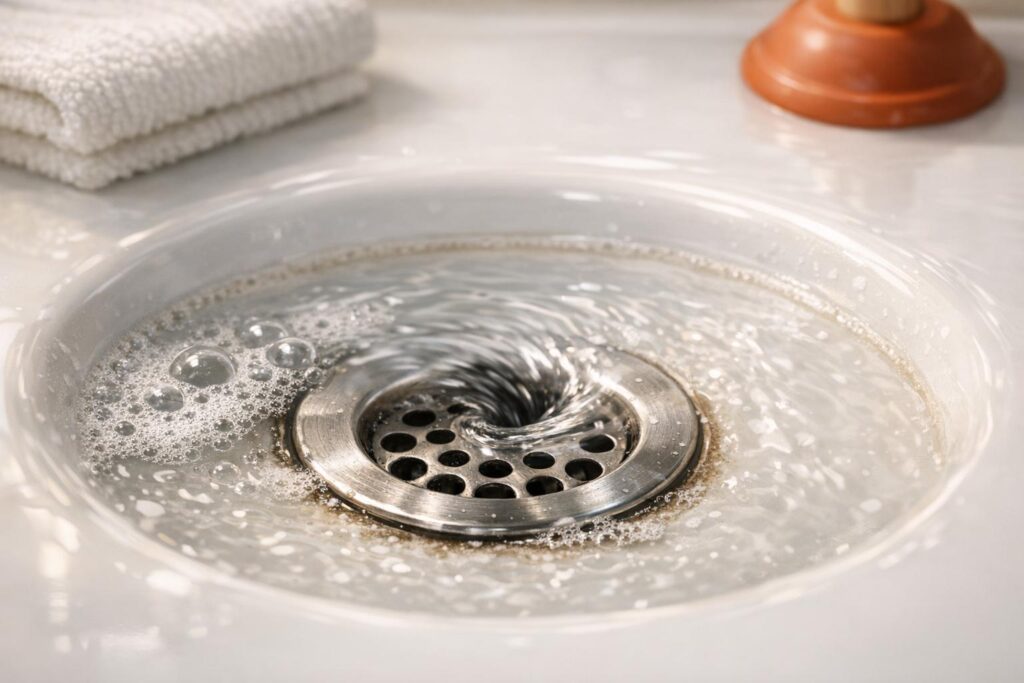
If water starts pooling in your shower or your sink takes forever to empty, you’re likely facing a partial blockage in the drain line. This is one of the first signs that something is building up inside your pipes, narrowing the flow.
"A single slow drain is likely caused by a partial clog somewhere along that drain." – Plumbline Services
In bathrooms, the usual culprits are hair and soap scum, which form sticky clumps that cling to pipe walls, often getting stuck in the P-trap. Kitchen sinks, on the other hand, have their own nemesis: fats, oils, and grease (commonly called FOG). When you pour liquid grease down the drain, it cools and hardens, creating a sticky coating inside the pipe that traps food particles along the way. To avoid this, never pour grease down the sink. Over time, these buildups reduce the pipe’s diameter, turning a steady flow into a frustrating trickle.
The location of the slow drain can also give you clues. If only one sink or tub is affected, the clog is likely close to the surface and easier to handle. But if multiple fixtures are draining slowly, you might be dealing with a bigger problem in the main sewer line. Watch for telltale signs like water backing up in one fixture when you use another – such as the shower filling up when you flush the toilet. That’s a strong indicator of a main line blockage, which often requires professional attention.
Ignoring these early signs can lead to bigger headaches, including complete blockages, sewage backups, and potential water damage. Prevention is key: use drain screens to catch hair and food scraps, avoid pouring cooking grease down the sink, and flush your drains weekly with boiling water to dissolve soap and grease buildup. Paying attention to these symptoms can save you from dealing with more severe plumbing issues down the line.
2. Bad Smells From Drains
If your drains are giving off odors like rotten eggs, sewage, or a musty smell, it’s often a sign of organic buildup. Over time, materials like food waste, grease, hair, and soap scum accumulate in pipes, creating the perfect environment for bacteria. These bacteria release hydrogen sulfide gas, which is responsible for that unmistakable smell.
When slow drainage is paired with unpleasant odors, it’s a clear sign that bacterial activity is making a clog worse.
"A musty, moldy smell coming from your sink or bathtub could spell trouble… a drain clogged with hair, soap scum, grease, and other organic materials creates the prime breeding ground." – Allen Service
The type of smell can often hint at what’s happening inside your pipes. A musty odor usually points to mold thriving on debris in warm, damp conditions. On the other hand, a sewage smell from a single drain might mean the P-trap has dried out. This is common in drains that aren’t used often, like those in guest bathrooms or floor drains. Running water for a few minutes can refill the trap and restore the water barrier. However, if the smell doesn’t go away, you could be dealing with a clog or even a broken pipe.
It’s also important to note how widespread the smell is. If it’s coming from just one drain, the issue is likely localized. But if multiple drains are affected, it could point to a main sewer line blockage. To confirm, check your sewer cleanout – usually located outside or in the basement – for standing water or sewage.
Once you’ve identified the severity of the issue, it’s time to take action.
"Store-bought cleaners may mask the smell temporarily, but only professional drain cleaning services can eliminate it at the source." – Tom Drexler Plumbing
Avoid relying on chemical drain cleaners, as they can damage your pipes and only provide a temporary fix. For minor odors, try a natural solution: pour 1 cup of baking soda into the drain, followed by 1 cup of vinegar. Let it sit for 5–10 minutes, then flush with boiling water. If the smell lingers or affects multiple drains, professional help is your best bet. For those in Round Rock, Texas, Round Rock Plumbing offers expert drain cleaning services and advanced diagnostic tools to quickly resolve these issues.
3. Gurgling Noises
Hearing gurgling or bubbling sounds from your drains, toilet, or sink? That’s usually a sign that air is trapped in your plumbing system. This happens when water struggles to flow past a blockage, creating air pockets that cause those bubbling noises. It’s a red flag that shouldn’t be ignored.
"A gurgling drain usually indicates a plumbing issue where air becomes trapped or forced through water in your pipes. It’s the plumbing equivalent of your stomach growling – a signal that something is out of balance in the system." – DrainCleaningUT.com
Where the gurgling occurs can give you a clue about the problem. If the noise is limited to one sink, it’s likely a localized clog – usually caused by hair, grease, or soap scum buildup. But if you notice your toilet gurgling when you run the sink, or if multiple drains make noise, this points to a main sewer line blockage or a blocked vent pipe on your roof. These are more serious issues that need immediate attention.
Another common cause is a blocked vent pipe. Plumbing systems rely on roof vents to balance air pressure and safely release sewer gases. When these vents get clogged with debris, like leaves or bird nests, air has nowhere to escape and gets forced back through the drains, making that gurgling sound. If you see air bubbles rising in your toilet bowl while running a nearby faucet, stop using water and call a professional immediately – this could indicate a severe mainline clog.
Ignoring gurgling sounds can lead to bigger problems. Persistent noises, especially if paired with foul odors, often signal a severe clog that could result in sewage backups, burst pipes from pressure buildup, or even exposure to harmful sewer gases like methane and hydrogen sulfide. For minor clogs in a single sink, you might try clearing it with a drain snake or a mix of baking soda and vinegar. However, if the gurgling lasts more than a week or affects multiple fixtures, it’s time to bring in the pros. Companies like Round Rock Plumbing use advanced tools, such as drain cameras, to quickly diagnose and fix the issue before it escalates into a costly emergency.
4. Clogs Keep Coming Back
If you’re constantly dealing with clogged drains, it’s more than just an inconvenience – it’s a sign of a bigger plumbing issue. While DIY solutions like plunging or using drain cleaners might get water flowing again temporarily, they often fail to address the root cause.
"If you find yourself constantly plunging the same drain, it’s likely the clog isn’t fully cleared or there’s a more significant obstruction further down." – Acadiana Rooter
The problem often lies deeper in the system. Plungers or hand snakes might clear a small opening, but they leave behind grease, soap residue, or hair clinging to the pipe walls. This leftover buildup quickly traps more debris, leading to recurring clogs. Worse still, the issue might stem from problems that DIY tools can’t fix – like tree roots invading cracked pipes, corroded pipes with rough interiors, or structural defects such as a pipe belly, where waste pools instead of flowing away.
"Recurring clogs typically indicate… significant buildup along your pipe walls that’s quickly catching new debris or a structural issue with your pipes, such as a belly (low spot), root intrusion, or collapsed section." – Plumbing Solutions
Chemical drain cleaners might seem like a quick fix, but they can damage your pipes over time and won’t remove the real blockage. If you’re dealing with clogs more than once a month, it’s time to call in the pros. A professional camera inspection can reveal hidden issues – like tree root intrusion or a collapsed pipe – and advanced tools like hydro-jetting can thoroughly clean out stubborn buildup. Companies like Round Rock Plumbing use cutting-edge camera technology and hydro-jetting equipment to tackle even the toughest clogs for good.
5. Several Drains Clogged at Once
If multiple drains in your home clog at the same time, it’s a red flag for a main sewer line blockage. Unlike an isolated clog, this issue impacts several fixtures simultaneously and needs immediate attention.
"The problem isn’t three separate clogs. The problem is the single pipe they all feed into: the main sewer line." – Saffer Plumbing
Your main sewer line is the central pipe that connects all your home’s drains to the city sewer system or a septic tank. When this pipe is blocked, wastewater can’t flow out and ends up backing into various fixtures. For example, you might hear your toilet gurgling while running the kitchen sink or notice water rising in your shower when you flush the toilet. These are telltale signs of a mainline clog, often caused by tree roots, grease accumulation, or even collapsed pipes.
The first signs of trouble usually show up in the lowest drains in your home, such as basement floor drains or ground-level tubs and showers. Why? Water follows the path of least resistance. Blockages can result from various causes, including grease buildup, tree root intrusion, or improper items like baby wipes being flushed down the toilet.
If you suspect a mainline blockage, stop using water immediately. Running sinks, flushing toilets, or using appliances like dishwashers can worsen the situation, potentially leading to sewage backups inside your home. To confirm the issue, check your sewer cleanout pipe (usually located in your yard or basement). If you see standing water or sewage overflowing, it’s a clear sign of a blockage.
This is not a problem you can tackle on your own. Fixing a mainline clog requires specialized equipment like hydro-jetting or motorized augers. Professionals, such as those at Round Rock Plumbing, can use camera inspection technology to locate and identify the exact cause of the blockage without unnecessary digging.
6. Water Backs Up
When water starts backing up into your sink, tub, or toilet, it’s more than just an annoyance – it’s a sign of a serious plumbing issue that needs immediate attention. This happens when wastewater can’t leave your home due to a blockage, and it’s a step beyond the early warning signs like slow drains or recurring clogs.
"A clogged sewer line is a serious problem, and can even be considered a plumbing emergency. When pipes are blocked, wastewater has nowhere to go besides back up into your home." – Aaron Stickley, Licensed Plumber
Water backup typically points to a main sewer line blockage, which impacts all connected fixtures. For example, you might flush the toilet and notice water rising in your shower drain, or you could run the kitchen sink and hear bubbling from the bathtub. These cross-drain issues happen because the blocked main line forces wastewater to flow back through the easiest available route – your drains.
Stop using water immediately to avoid worsening the situation or causing flooding. Check your sewer cleanout pipe, which is usually outside or in the basement. If you see standing water or sewage inside, it confirms a main line clog. Backups often show up first in the lowest fixtures – like basement floor drains or ground-level showers – since water naturally flows downward.
Avoid chemical cleaners as they can harm your pipes and release dangerous fumes. This problem requires professional tools like motorized augers or hydro-jetting. Companies like Round Rock Plumbing use camera inspections to pinpoint the exact location of blockages and resolve them effectively.
Finally, keep an eye out for water pooling around drains, which is another clear sign of a blockage. Acting quickly can prevent further damage and restore your plumbing system.
7. Water Pools Around Drains
Pooling water around drains is often a clear sign that your plumbing system is struggling. Whether it’s in your sink, shower, dishwasher, or basement, standing water usually means a complete blockage has occurred, stopping the flow entirely.
If you notice water pooling inside appliances like dishwashers, the issue might be a clogged filter, a kink in the drain hose, or a problem with the garbage disposal. In kitchen and bathroom sinks, common culprits include hair, soap scum, grease, and food particles building up in the P-trap.
When water pools near basement drains, it’s often a sign of a more serious issue, like a blockage in the main sewer line. This could be caused by tree roots, a pipe collapse, or shifting ground. With the average person generating 80 to 100 gallons of wastewater daily, a mainline blockage can quickly lead to flooding or even sewage backup if not addressed immediately.
If water is pooling in multiple fixtures or basement drains, it’s best to stop using water altogether. Check your outdoor sewer cleanout (a capped white pipe) for standing waste, which can confirm a mainline blockage. Avoid using chemical cleaners on standing water – they can produce heat and toxic fumes that might damage your pipes.
For smaller, isolated pooling issues, start with a plunger or a plumbing snake to clear the blockage. Regular maintenance can also help prevent future build-up. However, if the problem persists despite your efforts, it’s time to call in the professionals. Round Rock Plumbing uses tools like camera inspections to locate blockages and offers solutions such as hydro-jetting to restore proper drainage.
Why Hire a Professional for Drain Cleaning
When you notice signs of a clogged drain, professional cleaning offers a reliable way to address the issue at its core. While plungers or store-bought drain cleaners might seem like an easy fix, they often only provide short-term results. Professionals, on the other hand, use advanced tools like inline video cameras to inspect your pipes. These inspections pinpoint the exact cause of the problem – whether it’s tree roots invading the system, mineral buildup from Central Texas’s hard water, or even a collapsed pipe. This precise approach ensures the issue is properly addressed, not just temporarily patched.
One standout method used by professionals is hydro-jetting. Unlike manual snaking, which may only break up part of the clog, hydro-jetting uses high-pressure water to thoroughly clean the inside of your pipes. This process removes grease, mineral scale, and bacteria buildup, leaving your pipes in much better condition. Did you know that roughly 10% of U.S. homes experience drainage issues that waste up to 90 gallons of water each day? Professional maintenance can help prevent such waste.
DIY solutions, while tempting, come with risks. Chemical drain cleaners, for example, generate heat and toxic fumes that can corrode metal fittings and even crack plastic pipes over time. The American Society of Home Inspectors (ASHI) warns against their use, as they can gradually erode your plumbing. Professionals, however, rely on mechanical methods that are both effective and safe for your pipes.
Round Rock Plumbing, a trusted name in Round Rock, Texas, exemplifies the advantages of hiring professionals. They use advanced camera inspections to detect early signs of damage, helping to prevent costly emergencies like sewage backups or burst pipes. Their services cater to both residential and commercial properties, offering tailored solutions for everything from routine maintenance to urgent sewer line repairs.
Beyond protecting your plumbing, professional drain cleaning also safeguards your health. Stagnant water and sewage backups can harbor harmful bacteria and pathogens, which experts are trained to handle safely. Scheduling annual professional cleanings can help you avoid expensive repairs and prevent structural water damage to your home, including floors, drywall, and carpets.
Drain Problem Comparison Table
Here’s a handy table summarizing common drain issues, their severity levels, and likely causes. Use this as a quick reference to decide whether you can tackle the problem yourself or if it’s time to call in the pros. Issues range from minor inconveniences to serious emergencies that could lead to water damage or health risks.
Symptoms and Causes
| Issue | Severity Level | Likely Cause |
|---|---|---|
| Slow Drainage | Low to Moderate | Hair, soap scum, or grease buildup |
| Foul Odors | Moderate | Decaying organic matter |
| Gurgling Sounds | Moderate to High | Partial clog or trapped air |
| Recurring Clogs | Moderate | Deep-seated obstruction |
| Multiple Drains Affected | High | Main sewer line blockage |
| Water Backups | High | Severe blockage |
| Standing Water | Critical | Complete blockage |
For instance, if only one sink is draining slowly, it’s often caused by hair, soap scum, or grease accumulating in the P-trap. This is usually manageable with tools like a plunger or a drain snake. On the other hand, if multiple drains are affected, it’s likely a blockage in the main sewer line – a job best left to professionals.
"A nearly or fully clogged sewer line exhibits several telltale signs. Recognizing these symptoms early can prevent costly damage to your home." – Air & Plumbing Today
Standing water near floor drains or sewage backing up into fixtures represents a critical situation. These signs point to a complete blockage, which can expose your home to harmful bacteria and severe water damage. In such cases, immediate professional intervention is essential.
To avoid these headaches, consider scheduling professional drain cleaning every 18 to 22 months. Regular maintenance can help keep severe blockages at bay.
Conclusion
The seven warning signs of drain trouble – like slow drainage or pooling water – shouldn’t be ignored. Letting these issues slide can lead to higher repair costs and serious health risks, such as bacteria, mold, and pests. Did you know that around 10% of U.S. homes have leaks or drainage problems that waste up to 90 gallons of water daily? That’s not just bad for your wallet; it also puts extra strain on your plumbing system.
In more extreme cases, trapped bacteria can release hydrogen sulfide gas, which, when combined with methane from sewer leaks, can become toxic – or even explosive.
"Ignoring the signs of a blocked or compromised drain can lead to expensive repairs, structural damage, and potential health hazards." – White Plumbing Company
Acting quickly and calling in professionals can stop these problems from spiraling out of control. Skip chemical drain cleaners – they can damage your pipes. Instead, watch for signs like unexpected spikes in your water bill, unusual gurgling noises, or multiple slow drains. These are clear indicators that it’s time to bring in the experts.
For dependable, long-term fixes, contact Round Rock Plumbing. They offer drain camera inspections and hydro-jetting services, along with 24/7 emergency support and maintenance plans. Protect your home from costly repairs and keep your plumbing in top shape for years to come.
FAQs
What problems can slow drains cause if ignored?
Ignoring slow drains might seem harmless at first, but it can spiral into much bigger problems. Water backups and flooding can wreak havoc on your home, causing damage to floors, walls, and belongings. Plus, standing water is a breeding ground for mold, which can lead to health concerns for you and your family. On top of that, untreated drainage issues can wear down your pipes over time, potentially leading to expensive repairs or even a total plumbing system failure.
Tackling slow drains early is a smart move. It helps you avoid these headaches and keeps your plumbing system running smoothly for the long haul.
Why does my drain smell bad, and how can I tell if it’s a dry P-trap or something more serious?
A foul odor coming from your drain is often due to a dry P-trap, especially in drains that don’t get much use. The P-trap is a U-shaped pipe designed to hold water, which acts as a barrier to prevent sewer gases from creeping into your home. When it dries out, those gases can escape, leading to unpleasant smells. A simple fix? Pour about a cup of water down the drain to refill the trap. This usually does the trick if a dry P-trap is the culprit.
But what if the smell sticks around? That could point to a bigger issue – like a clog, a sewer line problem, or debris buildup in your pipes. Persistent odors often mean it’s time for a professional to step in. If you’re in Round Rock, Texas, Round Rock Plumbing provides expert drain cleaning and diagnostic services to quickly figure out and fix the issue.
When should I call a plumber instead of trying to unclog a drain myself?
You’ll want to call a plumber when a clogged drain starts showing signs that it’s more than just a minor issue. Watch out for slow drainage, unpleasant odors, or clogs that keep coming back – these are clear indicators that something bigger might be wrong. Other red flags include gurgling sounds, standing water, or multiple drains backing up at the same time. These symptoms often point to deeper plumbing problems.
If a plunger or store-bought drain cleaner doesn’t solve the issue – or if the problem keeps resurfacing – it’s time to bring in a professional. Plumbers have specialized tools like drain cameras to pinpoint the exact cause of the blockage and methods like hydro jetting to clear it out without causing damage. Ignoring these warning signs could lead to more serious issues, like sewer backups or broken pipes, which can be costly to repair. When in doubt, don’t wait – get expert help to keep your plumbing in good shape.
Related Blog Posts
- How to Unclog a Drain Without Calling a Plumber
- Best Drain Cleaning Methods: Chemical vs Natural
- How to Handle a Sewer Backup Emergency
- 5 Signs of a Sewer Line Leak
Need a Plumber in Round Rock?
Get fast, reliable service from licensed professionals.
Or call us now: (512) 598-4241