Ignoring your water heater’s annual inspection can cost you big – both in safety and money. Here’s why scheduling a yearly checkup is crucial:
- Save on Energy Bills: Sediment buildup increases energy consumption by 10-30%. Regular maintenance boosts efficiency by 10-15%.
- Extend Lifespan: A neglected heater lasts 6-7 years. With care, it can last 12-15 years, saving you $880-$1,800 in replacement costs.
- Prevent Expensive Damage: Emergency repairs like burst pipes or water damage can cost $5,000-$70,000. Inspections catch issues early for $75-$150.
- Improve Safety: Technicians check for gas leaks, carbon monoxide risks, and faulty pressure valves to avoid dangerous accidents.
For residents in areas with hard water, like Round Rock, Texas, inspections are even more critical to combat mineral buildup. A small investment in maintenance ensures consistent hot water, lower energy bills, and fewer headaches.

Annual Water Heater Inspection Benefits: Cost Savings and Safety Statistics
Inspecting a Water Heater with Julie Erck, CPI
Why You Need Annual Water Heater Inspections
Skipping annual water heater inspections can lead to unexpected failures that disrupt your daily routine and drive up repair costs. Problems like sediment buildup often go unnoticed until they escalate – turning your hot shower into an icy surprise or, worse, causing costly water damage. A professional inspection helps catch these issues early, making repairs manageable and affordable. Below, we’ll explore how inspections help prevent breakdowns, maintain consistent hot water, and extend the life of your water heater.
Preventing Expensive Breakdowns
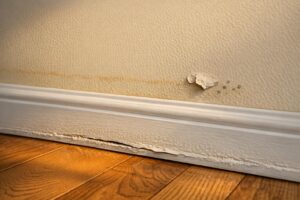
Inspections are key to avoiding major repair bills. During a checkup, technicians look for early warning signs like rust spots (sometimes called "freckles"), pooling water around the base, or corrosion in electrical components. If left unchecked, these minor issues can snowball into severe problems. For instance, a burst pipe can lead to water damage costing anywhere from $5,000 to $70,000, while slab leak repairs typically range from $2,000 to $6,000.
Technicians also test the Temperature and Pressure Relief (TPR) valve to ensure it’s functioning properly. A stuck TPR valve can cause dangerous pressure buildup inside the tank. Regular inspections help you avoid costly emergencies by addressing these problems before they spiral out of control.
Maintaining Consistent Hot Water
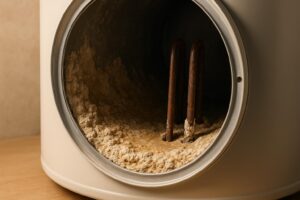
Routine maintenance plays a big role in ensuring your water heater delivers consistent hot water. Over time, sediment and limescale can build up on the heating elements, making it harder for the unit to maintain a steady temperature. This can lead to slower recovery times and insufficient hot water when you need it most. Annual tank flushing removes these deposits, helping your water heater run efficiently.
If you live in areas with hard water, like Round Rock, regular maintenance is even more important. Hard water speeds up mineral buildup, forcing your system to work harder and increasing the risk of heating element burnout. Routine care not only keeps the water temperature steady but also protects the internal components of your water heater.
Making Your Water Heater Last Longer
Replacing the anode rod is a simple yet effective way to extend your water heater’s lifespan. This component is designed to corrode in place of your tank, protecting it from rust. By swapping out the anode rod every 2–3 years, you can extend your water heater’s life from under 10 years to over 15 years. Neglect this step, and the tank may corrode from the inside out, leading to a full replacement that can cost between $880 and $1,800.
Regular inspections and maintenance not only save you money in the long run but also ensure your water heater performs reliably year after year.
Benefits of Annual Water Heater Inspections
Lower Energy Bills
Did you know water heating makes up about 20% of your home’s energy use? That means even a small boost in efficiency can noticeably lower your monthly bills. Over time, sediment can collect at the bottom of your water heater tank, creating a barrier between the burner and the water. This forces your system to work harder, increasing energy consumption by 10% to 30%.
Annual inspections help address this issue by flushing out sediment, adjusting thermostats, and fixing leaks. These steps can improve your water heater’s efficiency by 10% to 15%. The U.S. Environmental Protection Agency advises, "Flush your water heater to reduce sediment buildup which can decrease efficiency". On top of cutting energy costs, regular maintenance ensures your household stays safe.
Better Safety for Your Property
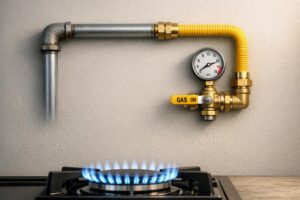
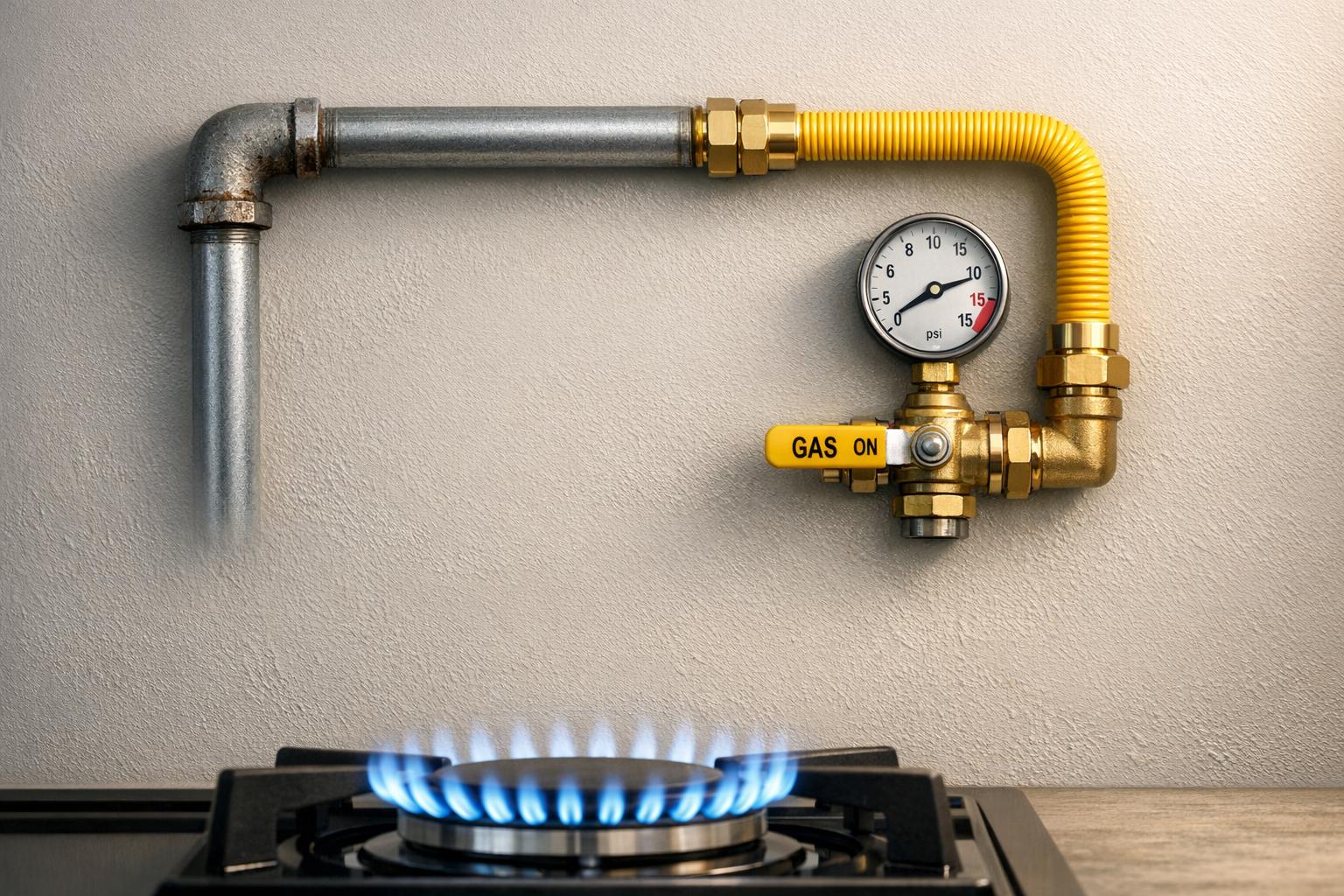
Inspections aren’t just about savings – they protect your home, too. For gas water heaters, technicians check for issues like poor venting or improper combustion that could lead to carbon monoxide leaks. They also test for gas leaks, which cause around 4,200 home fires each year in the U.S.. A blue flame is normal, but if it’s yellow or flickering, it’s a sign you need immediate attention.
Technicians also verify that your thermostat is set at a safe 120°F – a temperature that prevents scalding and reduces energy waste. They’ll inspect the TPR (temperature and pressure relief) valve, which Amanda Ryan, Author, describes as "the tiny part that keeps your water heater from turning into a steam-powered rocket". Catching leaks early during these inspections can save you from costly water damage. For example, repairing a slab leak can cost anywhere from $2,000 to $6,000. Regular checkups help avoid these expenses and keep your home safe.
Reduced Long-Term Expenses
Routine inspections do more than prevent emergencies – they save you money in the long run. Spending $75–$150 annually on maintenance can prevent emergency repairs that cost two to three times as much. For instance, replacing a corroding anode rod or fixing a small valve leak during an inspection is far less expensive than dealing with extensive water damage, which can cost anywhere from $5,000 to $70,000.
Regular maintenance also extends the lifespan of your water heater. A neglected unit may fail after just 6 or 7 years, but one that’s well-maintained can last 12 to 15 years. This means you can delay the $880 to $1,800 replacement cost while keeping your system running efficiently. Plus, many manufacturers require proof of regular professional maintenance to keep your warranty valid. Those inspection receipts could save you thousands if a major component ever fails.
sbb-itb-5fe396b
What to Expect During a Water Heater Inspection
Once you understand why inspections are important, it’s helpful to know what actually happens during one. A professional water heater inspection involves a thorough check of all critical components. Technicians start with a visual inspection of the tank, pipes, gaskets, screws, and connections. They look for signs of moisture, puddles, or corrosion and listen for unusual noises – like popping or rumbling – that could signal sediment buildup trapping water inside. The process also includes sediment removal, testing essential parts, and checking for leaks.
Removing Sediment from the Tank
Flushing the tank is one of the most important steps during an inspection. The technician connects a hose to the drain valve, opens it to empty the tank, and then runs cold water through to flush out mineral deposits. This continues until the water runs clear.
Josh Mitchell, a Professional Plumbing Technician at PlumbingLab.com, explains: "Buildup reduces efficiency, shortens lifespan, and increases energy bills".
By regularly draining and flushing your tank, you can add 3 to 5 years to your water heater’s lifespan.
Examining Key Parts
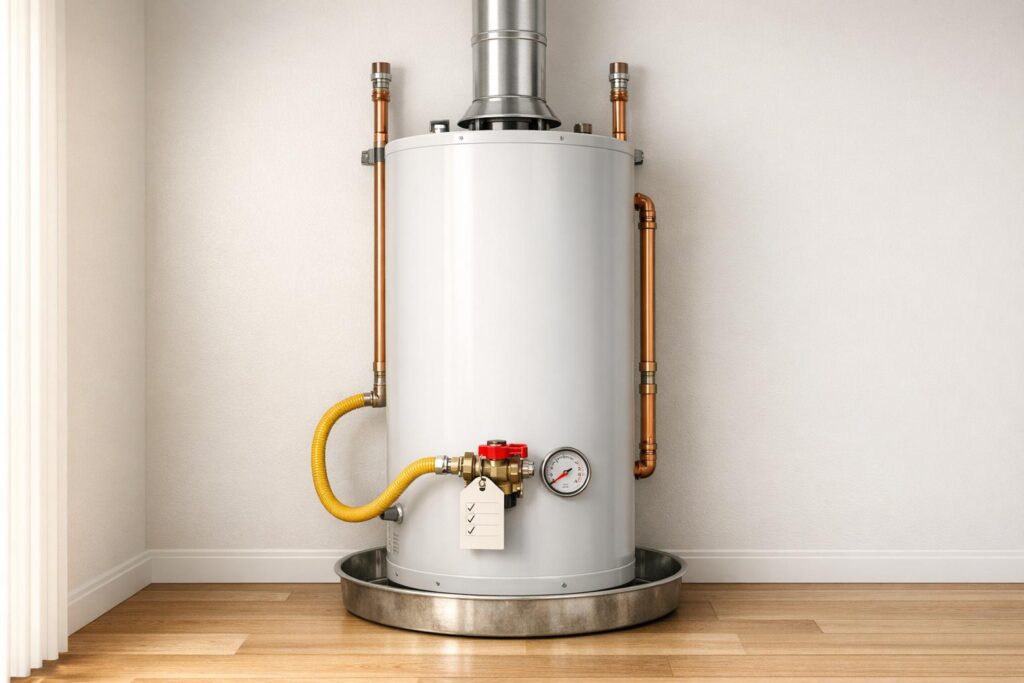
Next, technicians inspect critical components like the anode rod, T&P valve, and thermostat.
- The anode rod is checked for corrosion. This part attracts corrosive elements to protect the tank lining and typically needs replacing every three to five years.
- The Temperature and Pressure (T&P) valve is tested to ensure it releases water and air properly, which helps prevent dangerous overpressurization.
- The thermostat is verified to be set between 120°F and 140°F, ensuring both safety and efficiency.
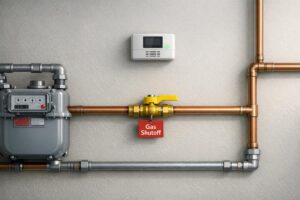
For gas water heaters, technicians inspect the gas line, burner (looking for a steady blue flame), and the venting system to prevent carbon monoxide leaks. On electric models, they test the heating elements to confirm they’re functioning correctly. Beyond these internal components, they also check for external damage that could lead to future problems.
Looking for Leaks and Rust
Inspectors carefully examine the system for signs of rust-colored water, scorch marks, or moisture around the unit.
Liam Cope, Founder of Engineer Fix, highlights: "Sediment buildup, if left unaddressed, can harden and insulate the heating element or burner, leading to premature component failure".
Spotting these warning signs early can save you from costly repairs that might run over $1,000. Addressing small issues now can prevent them from escalating into major emergencies.
For those in Round Rock, Texas, Round Rock Plumbing adheres to these detailed inspection steps to keep your water heater running safely and efficiently year-round. Visit Round Rock Plumbing for expert water heater inspections and maintenance services.
How Regular Inspections Save Money and Improve Safety
Regular inspections do more than just keep your water heater running – they help you save money over time and make your home safer. A well-maintained water heater can last 12–15 years, while a neglected one might fail as early as 6 or 7 years.
Delaying Replacement Costs
Investing $75–$150 annually for an inspection can save you from costly repairs or premature replacements. In areas like Round Rock, where hard water takes a toll on plumbing systems, this kind of maintenance is even more essential. Spending $150–$200 each year on upkeep can help you avoid repair bills ranging from $500 to $800. Something as simple as replacing an anode rod – a part that costs just $20–$40 – can prevent corrosion and significantly extend the life of your tank.
But the benefits of regular inspections go beyond just saving money. They also protect your home from serious safety risks.
Stopping Dangerous Problems
Gas leaks are a serious hazard, causing around 4,200 home fires annually in the U.S.. Another potential danger is a malfunctioning Temperature and Pressure Relief (TPR) valve, which can lead to catastrophic tank ruptures. During an inspection, professionals also check for "backdrafting", a condition where exhaust gases like carbon monoxide leak into your home instead of venting outside.
"Gas leaks are silent but deadly. Unlike water leaks, they don’t leave visible signs like puddles or water stains." – Sweetwater Plumbing
Neglecting your water heater could also lead to a burst pipe, which can cause anywhere from $5,000 to $70,000 in water damage. Companies like Round Rock Plumbing emphasize how routine inspections not only save you money but also protect your home from these risks.
Conclusion
Annual inspections are a smart way to protect both your home and your budget. Spending just $75–$200 each year can help you avoid repair costs that could easily exceed $1,000. Plus, regular maintenance can extend your water heater’s lifespan from 6–7 years to an impressive 12–15 years. On top of that, a well-maintained system uses 10% to 15% less energy, which means lower utility bills.
Inspections aren’t just about saving money – they’re also about safety. They help prevent serious hazards like gas leaks, carbon monoxide exposure, and tank ruptures. A ruptured tank alone could lead to water damage costing anywhere from $5,000 to $70,000. Key maintenance steps, like testing the Temperature and Pressure Relief valve and checking gas connections, play a critical role in avoiding these risks.
For reliable service, Round Rock Plumbing has you covered. Their expert technicians provide thorough water heater inspections and maintenance, from flushing out sediment to testing components. This ensures your water heater runs smoothly and safely all year long. Given the hard water issues common in the Round Rock area, regular professional care is especially important to combat mineral buildup and extend your system’s life.
Don’t wait – schedule your annual inspection today and avoid the hassle of cold showers and unexpected repairs.
FAQs
Do I need a water heater inspection if it seems to be working fine?
Yes, scheduling annual inspections is essential, even if your water heater seems to be running fine. These check-ups can uncover hidden problems like corrosion, sediment buildup, or malfunctioning safety components before they escalate into expensive repairs or safety risks. Routine maintenance also helps your water heater run more efficiently and safely, extending its lifespan.
How can I tell if hard water is damaging my water heater?
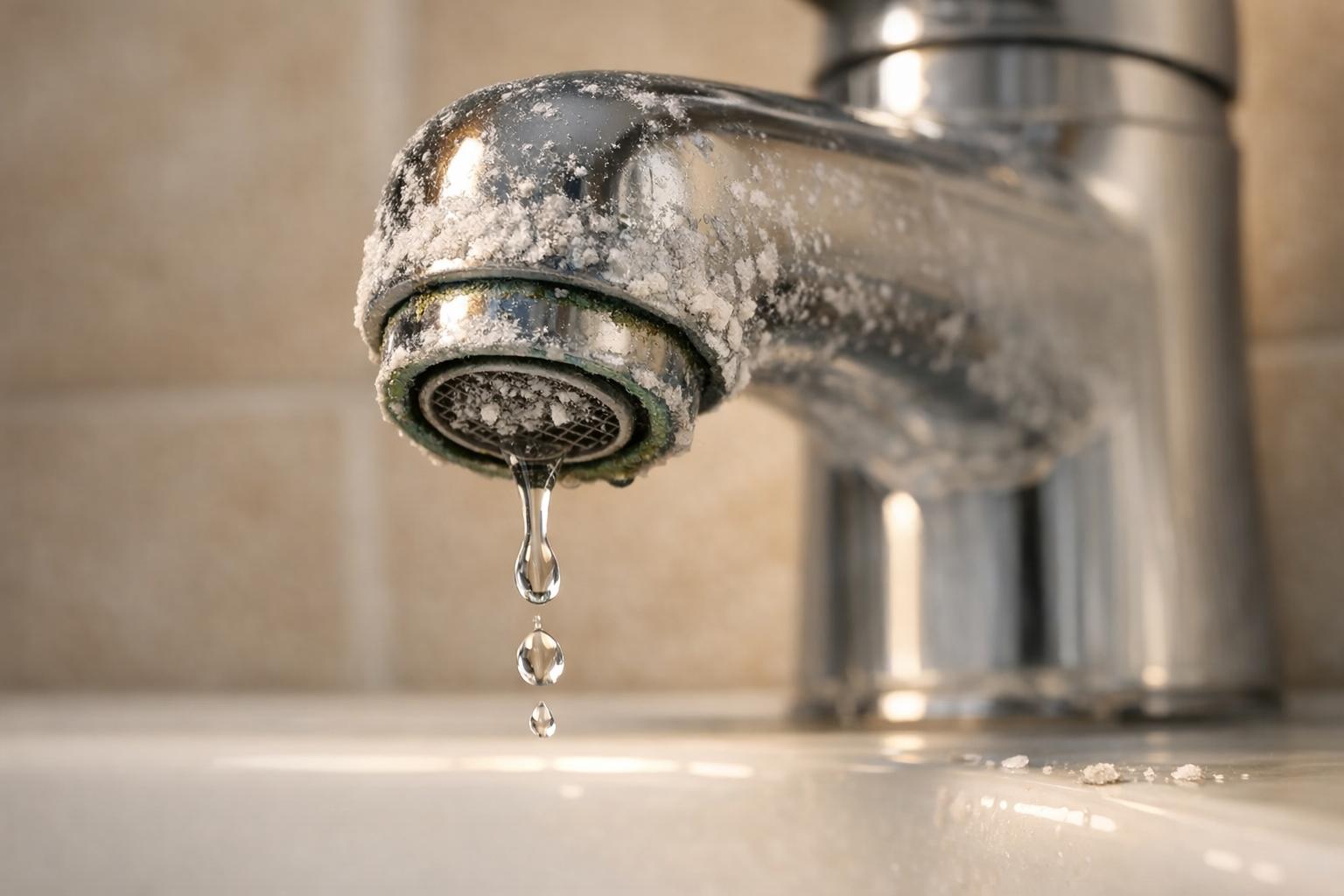
Signs that your water heater may be suffering from hard water damage include white, crusty deposits around faucets and showerheads, a noticeable drop in your hot water supply, strange popping or cracking sounds from the tank, and unexpectedly high energy bills. These problems are usually caused by mineral buildup and sediment collecting inside the water heater, which can interfere with its performance and efficiency.
What water heater maintenance can I safely do myself?
If you’re comfortable with basic plumbing, you can take care of a few water heater maintenance tasks yourself, such as:
- Checking the tank for any signs of leaks or rust.
- Flushing the tank to clear out sediment buildup (recommended every 1–2 years).
- Testing the pressure relief valve by lifting its tab to confirm proper water flow.
However, for more complex tasks like replacing the anode rod or handling gas connections, it’s best to call a professional to ensure safety.