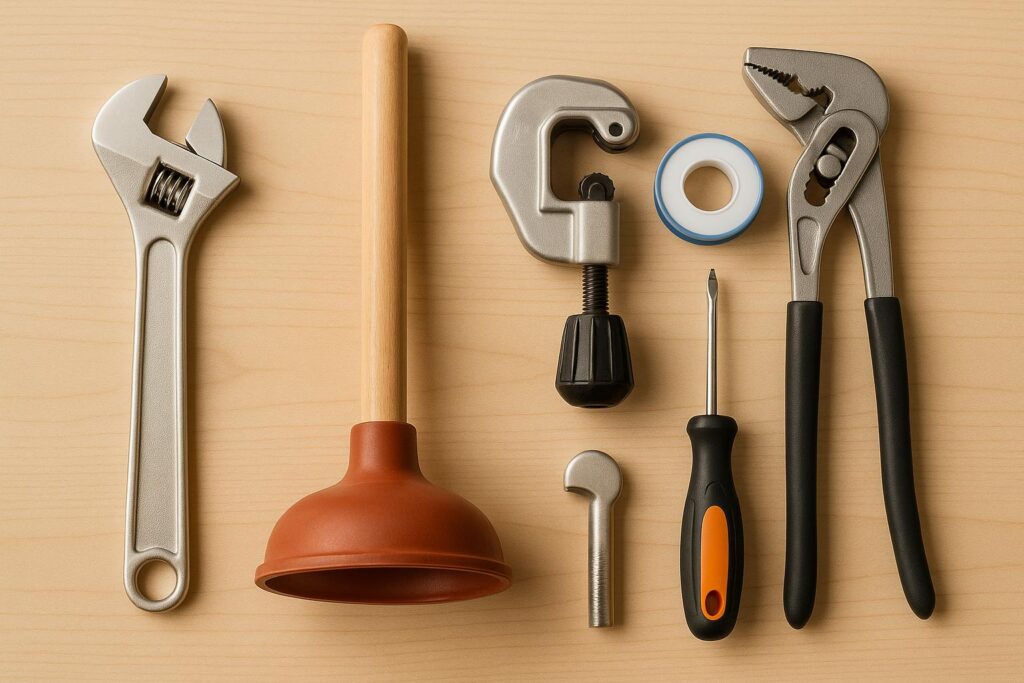
Every homeowner faces plumbing problems, like clogged drains or leaky faucets. Hiring a plumber for minor fixes can be costly, but with a few basic tools, you can handle most common issues yourself. Here are six must-have plumbing tools to keep at home:
- Plunger: Clears clogs in toilets, sinks, and tubs. ($10–$30)
- Adjustable Wrench: Tightens or loosens nuts and bolts on fixtures. ($10–$40)
- Pipe Wrench: Grips and turns pipes or fittings with high torque. ($15–$30)
- Plumber’s Tape: Seals threaded connections to prevent leaks. ($10–$15)
- Drain Snake: Removes stubborn clogs deeper in pipes. ($20–$40)
- Basin Wrench: Reaches tight spaces under sinks for faucet repairs. ($10–$20)
Quick Tip: Start with a plunger, plumber’s tape, and an adjustable wrench for basic repairs. These tools are affordable and can save you time and money on small plumbing emergencies.
Essential Plumbing Tools Every Homeowner Should Have | Must-Have Plumbing Gear
1. Plunger
A plunger is a must-have tool for tackling clogged drains and toilets. Affordable and straightforward to use, it works by creating hydraulic pressure through a push-pull motion, helping to clear blockages without the need for professional help. It’s a handy first line of defense for minor plumbing issues, and different designs are tailored for specific tasks.
Best For
A cup plunger is ideal for flat surfaces like sinks, bathtubs, and showers. It features a rubber suction cup attached to a wooden handle, making it effective for removing debris such as hair, food particles, and soap residue. On the other hand, a flange plunger is specifically designed for toilets. Its extended rubber lip is shaped to fit the curved contours of a toilet bowl, ensuring a tighter seal and better performance. Plungers are particularly effective for minor blockages, especially if you address the issue early before it worsens.
Limitations
Plungers can struggle with more severe or deep-seated clogs, such as heavy hair buildup or obstructions further down the pipe. In these cases, tools like a drain snake or auger may be required.
Typical Price (USD)
You can find a reliable plunger priced between $10 and $30. For tougher jobs, professional-grade models with stronger suction are also available.
2. Adjustable Wrench
The adjustable wrench is a go-to tool for everyday plumbing tasks, offering flexibility and ease of use. Known also as a Crescent wrench, it’s a staple for basic plumbing repairs. Its adjustable jaw can fit nuts and bolts of various sizes, making it handy for working on a range of plumbing fixtures and fittings around the house.
Primary Use
This tool is perfect for tightening and loosening hexagonal nuts and fittings on pipes and fixtures. It’s particularly useful for tasks like securing supply lines, adjusting compression fittings, and fastening hex nuts. Whether you’re replacing a faucet or snugging up a showerhead, the adjustable wrench gets the job done.
Best For
One of its standout features is its smooth jaws, which help protect delicate brass or chrome fixtures. This makes it ideal for handling components like compression nuts, angle stops, and shut-off valves. A 6-inch or 10-inch adjustable wrench is generally sufficient for most household plumbing needs. Plus, its design allows it to replace an entire set of fixed-size wrenches, freeing up space in your toolbox.
Limitations
While versatile, the adjustable wrench isn’t without its drawbacks. It doesn’t provide the same precision as specialized hex wrenches and can be a bit unwieldy in tight spaces due to its protruding jaw. Additionally, it’s important to ensure the jaw is firmly set during use – any looseness can damage fittings, especially under heavy torque. Over time, standard models may wear down the edges of fasteners, so for heavy-duty or intricate plumbing jobs, more specialized tools might be a better choice.
Typical Price (USD)
Expect to pay between $10 and $40 for a quality adjustable wrench. This small investment gives you a reliable, multipurpose tool capable of tackling a variety of household repairs and maintenance tasks.
3. Pipe Wrench
The pipe wrench is the powerhouse of any plumbing toolkit. Unlike an adjustable wrench with smooth jaws, this tool has serrated teeth designed to grip pipes and fittings tightly. It’s built for tackling heavy-duty tasks where regular wrenches just don’t cut it. Let’s explore how this essential tool plays a role in plumbing repairs.
"The pipe wrench serves as a plumber’s largest wrench. Plumbers use these heavy tools to tighten and loosen nuts and fittings on pipework." – ServiceTitan
Primary Use
The pipe wrench is perfect for gripping and turning pipes, nuts, and fittings that need significant force. Its serrated jaws are designed to lock onto round surfaces, making it indispensable for loosening rusted or stubborn fittings. Whether you’re tightening or loosening, this tool delivers the leverage you need for tough jobs.
Best For
This wrench shines when working with galvanized steel pipes, iron fittings, or any job that requires maximum torque. Its serrated jaws are especially handy for gripping slippery metal surfaces, often found in older plumbing systems. A 14-inch cast iron pipe wrench is a versatile choice for most residential tasks, offering a good mix of leverage and ease of use. For larger projects, an 18-inch model provides extra power. Always choose a size that matches the diameter of the pipe you’re working on.
Limitations
While the serrated teeth offer excellent grip, they can leave scratches or marks on surfaces. This makes the pipe wrench less ideal for visible chrome or brass fixtures. Its weight and size can also make overhead work challenging. For such situations, aluminum models are a lighter alternative that still deliver strength. To avoid surface damage, wrap pipes with rags before using the wrench.
Typical Price (USD)
You can find quality pipe wrenches in the $15 to $30 range, making them a budget-friendly addition to your toolkit. Reputable brands like Husky, Milwaukee, and Duratech offer durable options available at major U.S. retailers. For this modest price, you’ll have a reliable tool ready to handle even the toughest plumbing jobs around your home.
4. Plumber’s Tape
Plumber’s tape – often called Teflon, PTFE, or thread sealing tape – is a go-to solution for sealing threaded pipe connections and preventing leaks.
"Any DIYer or homeowner should have a roll of thread tape, aka ‘the duct tape of plumbing,’ on hand." – Oatey
Primary Use
This tape works by filling in the tiny gaps between pipe threads, creating a watertight and lubricated seal. To use it, wrap the tape clockwise around dry threads, ensuring a snug fit. Its ability to provide a tight seal makes it a staple for both routine installations and quick repairs.
Best For
Plumber’s tape is perfect for everyday plumbing tasks like installing a showerhead, connecting pipes, or replacing a faucet. Its flexibility and durability make it easy to work with. For the best results, apply several layers of tape in a clockwise direction before tightening the connection. This prevents the tape from unraveling and ensures a secure seal.
Limitations
Keep in mind, plumber’s tape is only meant for threaded connections. It won’t work for sealing cracks in pipes or non-threaded joints, so it’s not a fix-all solution.
Typical Price (USD)
With prices ranging from $10 to $15, plumber’s tape is an affordable yet invaluable tool. Brands like Vanguard and Lasco are available on Amazon, while Harvey products can be found at Home Depot. This small investment can save you from bigger plumbing headaches down the road.
"One of the cheapest yet most valuable items in a toolkit, Teflon tape prevents leaks at threaded connections." – Simplify Home Tech
sbb-itb-5fe396b
5. Drain Snake
A drain snake, also known as a hand auger, is a flexible tool designed to handle clogs that a plunger just can’t reach.
Primary Use
This tool is perfect for breaking apart or pulling out clogs that other methods might leave behind. It’s especially handy for dealing with hair tangles or organic buildup that often lurks deeper in pipes.
Best For
Drain snakes are ideal for clearing blockages in sinks and showers. If you’re dealing with a clogged toilet, a toilet auger is a better choice – it has a protective rubber sleeve to prevent damage to the bowl. When plungers fail to do the job, a drain snake steps in as your next best option for tackling those hard-to-reach blockages. However, it’s important to use it correctly to avoid creating new problems.
Limitations
While drain snakes are effective, they aren’t a cure-all. If the clog is too severe, forcing the snake can damage your pipes or fixtures. In such cases, it’s better to call a professional plumber. Additionally, using the wrong type of snake or being overly aggressive can leave scratches on surfaces, so care is essential.
Typical Price (USD)
Hand augers are a budget-friendly tool, typically costing between $20 and $40. They’re a great investment for handling minor clogs without needing professional help. For more challenging or deeply embedded blockages, motorized snake machines are an option, but they’re pricier – ranging from $80 to $200 – and are usually better suited for professional use.
6. Basin Wrench
A basin wrench is a T-shaped tool specifically designed to work in the tight spaces under sinks. Its long handle and pivoting head make it perfect for reaching and adjusting the mounting and supply tube nuts that secure faucets and fixtures – places where standard wrenches just can’t get the job done.
Primary Use
The basin wrench is primarily used to tighten or loosen the nuts that hold faucets and fixtures in place. Thanks to its spring-loaded clamping jaw, it can grip nuts positioned at awkward angles, making it a go-to tool for faucet installations and repairs.
"If you need to remove or replace a hard-to-reach faucet, the basin wrench will come in handy. There really isn’t anything else that can do the same job." – Oatey
Best For
This tool shines when you’re installing or replacing faucets, especially in the cramped spaces behind sinks. If you’re a homeowner tackling a DIY faucet replacement, a basin wrench can save you from the hassle – and cost – of calling in a professional.
"This tool can be a lifesaver when pulling, disconnecting, or installing a tap in a cramped area." – Bayside Plumbing
Limitations
While it’s incredibly useful, a basin wrench does require a bit of practice. Getting the right grip and leverage can be tricky, especially in very tight spots. Some models are designed with improved grips and leverage features, which might be worth considering for added ease of use.
Typical Price (USD)
Basin wrenches are budget-friendly, usually costing between $10 and $20. For such a small investment, this tool quickly pays for itself by making faucet repairs and installations much simpler and more cost-effective.
Tool Comparison Chart
Having the right tools on hand can make tackling plumbing problems much easier. Below is a comparison of six essential tools, highlighting their uses, best applications, limitations, and price ranges. This summary complements the detailed breakdowns provided earlier, helping you decide which tools to prioritize for home repairs.
| Tool | Primary Uses | Best Applications | Limitations | Price Range (USD) |
|---|---|---|---|---|
| Plunger | Removes blockages in toilets, sinks, tubs, and showers | Ideal for minor clogs – use cup plungers for sinks/tubs and flange plungers for toilets | Limited to minor, accessible clogs | $10–$30 |
| Adjustable Wrench | Tightens or loosens hexagonal nuts and fittings; replaces faucets or showerheads | Perfect for small jobs involving various nut and bolt sizes; works well on smaller fixtures | Only suitable for hexagonal shapes; provides less leverage than specialized tools | $10–$40 |
| Pipe Wrench | Grips and turns pipes; loosens or tightens pipework nuts | Best for tasks needing extra leverage, such as removing rusted fittings; often used in pairs | Heavy and bulky; improper use can damage pipes | $15–$30 |
| Plumber’s Tape | Seals and prevents leaks in threaded joint connections | Creates watertight seals on threaded joints like showerheads | Limited to threaded connections and requires proper application | $10–$15 |
| Drain Snake | Clears deep clogs by breaking apart debris or grabbing blockages | Effective for stubborn clogs in smaller drains, especially those caused by hair or debris | Requires skill to use; not effective on all blockages | $20–$40 |
| Basin Wrench | Reaches tight spaces to loosen or tighten faucet mounting nuts | Ideal for faucet installations in cramped areas under sinks | Can be tricky to use; limited to specific tasks | $10–$20 |
Recommendations Based on Budget and Value
Budget-Friendly Starter Kit:
If you’re just getting started or working with a limited budget, consider these essentials: plumber’s tape ($10–$15), a plunger ($10–$30), and a basin wrench ($10–$20). Together, these tools handle common issues like leaks, clogs, and faucet repairs without stretching your wallet.
Best Value Tools:
For versatility, the adjustable wrench and plunger are excellent choices. The adjustable wrench can replace multiple tools, while the plunger is indispensable for clearing everyday clogs.
"Most homeowners own toilet plungers and sink plungers as a DIY tool, but plumbers should come equipped with them, too." – ServiceTitan
When to Spend More:
If you frequently deal with stubborn or deep clogs, investing in a drain snake ($20–$40) is worthwhile. It’s especially helpful for bathrooms prone to hair buildup or older plumbing systems that clog more easily.
Conclusion
Keeping these six essential plumbing tools in your home toolkit means you’re ready to tackle common issues as soon as they arise. Professional plumbing services can be expensive, but having these tools on hand offers a cost-effective, long-term solution. Not only will you save money on repairs, but you’ll also be prepared to address problems immediately – no waiting around for a plumber.
Picture this: a toilet overflows in the dead of night, or a faucet starts dripping on a Sunday morning. Instead of scrambling to find help, you can take action right away. As Bayside Plumbing explains:
"Some plumbing issues require immediate emergency plumbing attention. Having the right tools at hand allows you to address problems immediately, rather than waiting for a professional to arrive, which could take hours or even days".
Tools like a drain snake can stop minor clogs from escalating into serious blockages, and plumber’s tape is a quick fix for small leaks, helping you avoid potential water damage.
Beyond saving money, handling plumbing repairs yourself can be incredibly rewarding. It’s not just about fixing the problem – it’s about learning and growing as a homeowner. As Bayside Plumbing also points out:
"There’s a certain satisfaction in fixing things yourself. Not only do you learn a new skill, but there’s also a sense of accomplishment in knowing you’ve sorted out a problem with your hands".
Every repair you handle builds your confidence and sharpens your skills. Before long, you’ll feel more capable and in control of your home’s maintenance.
Start with the basics – a plunger, adjustable wrench, and plumber’s tape – and gradually expand your toolkit as you gain experience. With these tools by your side, you’ll be ready to handle everything from a leaky pipe to a clogged drain, ensuring your home runs smoothly no matter what challenges arise.
FAQs
What’s the difference between a cup plunger and a flange plunger, and which one should I use?
The key distinction between a cup plunger and a flange plunger comes down to their design and intended use. A cup plunger features a flat rubber cup, making it perfect for flat surfaces such as sinks, bathtubs, and showers. In contrast, a flange plunger includes an extra rubber flap extending from the cup. This design is especially suited for toilets, as it forms a tighter seal on curved or uneven openings.
For most homes, keeping both types on hand is a smart choice to tackle different kinds of clogs efficiently.
What’s the best way to use a drain snake without harming your pipes?
To use a drain snake safely, begin by gently inserting the coil into the drain – don’t push it in forcefully. Turn the handle slowly to navigate the snake through the pipe. If you encounter resistance, stop and pull back slightly, then adjust the angle before proceeding. This helps prevent damage to the pipes. Never use excessive force, as it can scratch or weaken the pipe walls. Once the blockage is cleared, carefully pull the snake out and clean it thoroughly before putting it away.
When should I call a professional plumber instead of fixing the issue myself?
While having a few plumbing tools on hand can help with small repairs, some problems are simply too big to tackle on your own. Situations like burst pipes, sewage backups, gas line issues, no water pressure, or water heater troubles demand the expertise of a professional. These types of problems can be dangerous, complicated, or lead to significant damage if not addressed properly.
If you’re ever unsure about the seriousness of a plumbing issue or don’t feel confident handling it yourself, it’s always smart to call in a plumber. Professionals come equipped with the right tools, experience, and skills to fix the problem safely and effectively.